Selective Metal Coating: The Gold Standard for Automotive Wiring
Vehicle electrification and autonomous vehicles are the biggest technological breakthroughs in the 100+ year history of the auto industry. These breakthroughs, conversely, will demand much more of the vehicle’s electrical architecture.
The changes will be both additive, meaning developing the systems and subsystems that no vehicle has today, and transformational, meaning reinventing components that already exist.
One of the essential transformations will be to the wires themselves. While copper has been the gold standard for automotive wiring forever, automakers have dreamed of using aluminum for nearly as long.
Why? Because it’s all about mass reduction. Aluminum is much lighter than copper with only 30 percent of copper’s mass. Reducing overall vehicle mass is more important than ever to help automakers and their customers develop greener and more efficient vehicles.
The science behind mass reduction is everything. Engine blocks, suspension components, body panels and even structural parts have migrated to lighter weight alloy materials.
While aluminum would appear to be an obvious candidate to replace the heavier copper wiring harnesses, aluminum has significant technical challenges when used in wiring. That road block that has prevented aluminum’s use for all these years isn’t the wiring, but rather its connection system.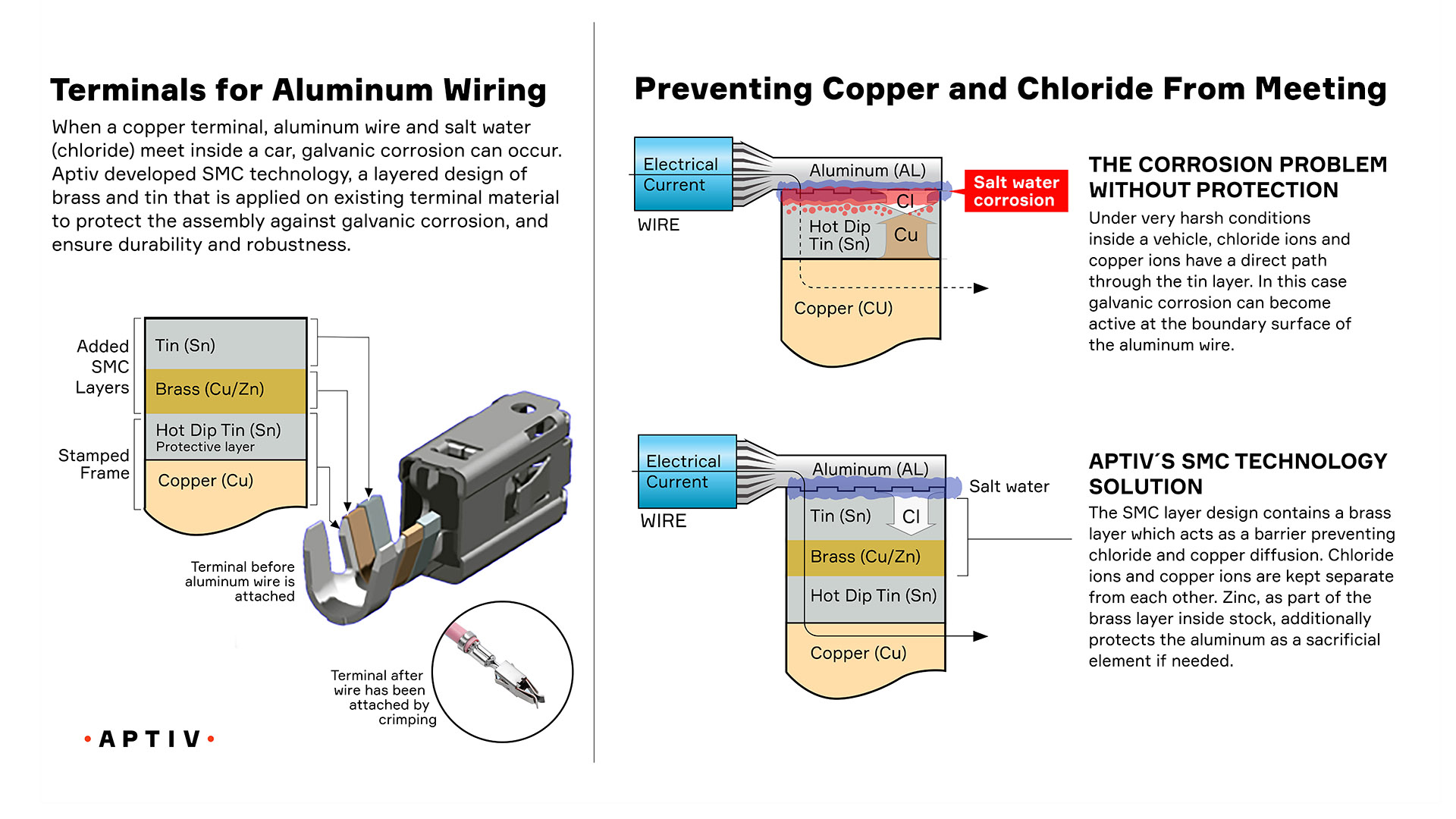
Connecting aluminum cable and a copper connector to each other requires additional, complex technical requirements - aluminum oxide on the outer surface of the cable and some type of protection against potential galvanic corrosion. This technical advancement has been out of reach, a deal-breaker for aluminum. Until now.
SMC technology is a key enabler
We have devised a new way to prevent galvanic corrosion and ensure stability of electrical and mechanical terminal connections for aluminum wiring by using an innovative technology called Selective Metal Coating (SMC).
In short, when a copper terminal, aluminum wire and salt water (chloride) meet inside a car, galvanic corrosion can occur. SMC technology is a layered design of brass and tin that is applied on existing terminal material to protect the assembly against galvanic corrosion, and assure durability and robustness.
Today, it’s possible to create a complete, aluminum wiring system, including the wiring, terminals, and unique manufacturing processes. The goal is to deliver these wiring technologies for all locations on the vehicle, including the hot, often wet, under hood environment.
These aluminum wiring systems could result in a potential mass reduction of up to 48 percent over today’s average conventional wiring harnesses. This reduction is significant and can also eliminate up to two kilograms (or approximately four pounds) on the first implementation level.
Beyond weight reduction
The need for potential mass savings from aluminum wiring and SMC terminals increases even more with the future commercialization of autonomous vehicles and their demands. For example, redundant systems will need to be developed to ensure a safer vehicle. Conversely, this will add even more material or mass to the overall wiring harness – an increase of up to 60 percent. Aluminum cable will be critical in reducing weight on vehicle architecture helping enable future trends.