
CES 2022
CES 2021
360° Experience
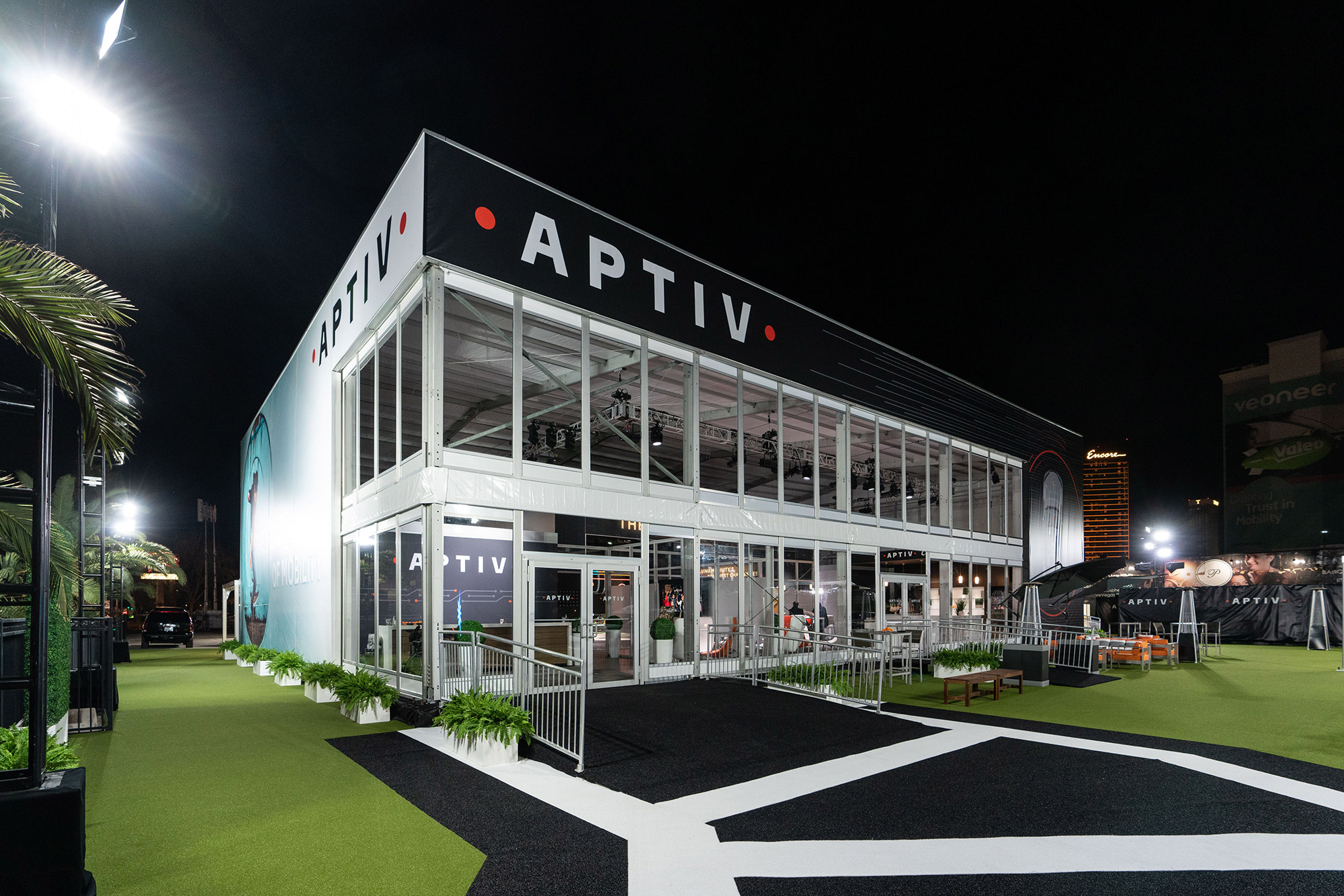
Explore our technology portfolio through a virtual tour of our pavilion at CES 2020. Drag your cursor to the left and right to look around the pavilion. Click on the orange hotspots to learn more about our technologies. And click on the arrows to move between rooms.
Start your journey now.
Aptiv at CES 2020
We know that by solving today’s problems through real-world applications we will not only keep up, but stay ahead to address all of our customers’ challenges in the future.
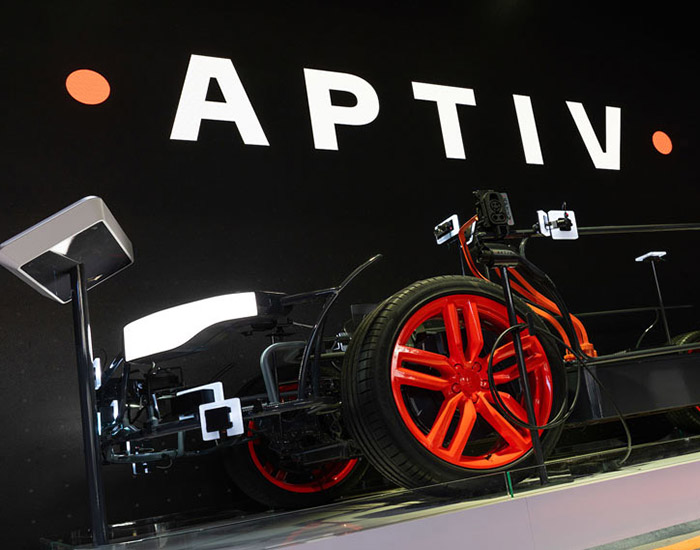
Aptiv’s Architecture Vision on Display
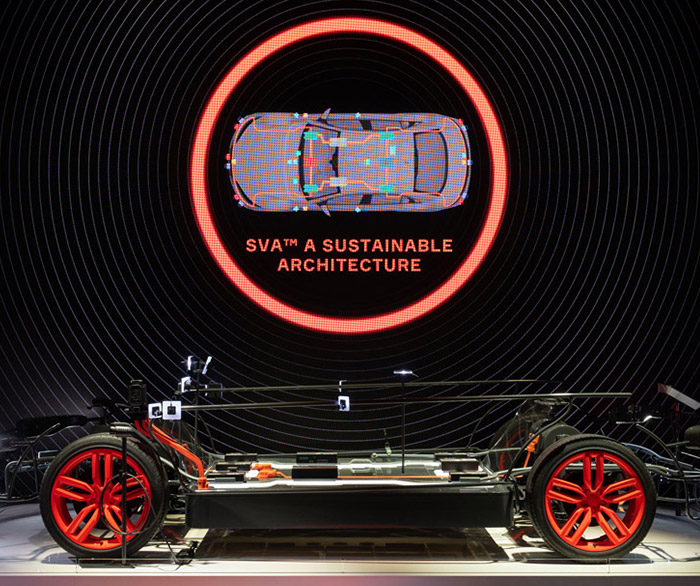
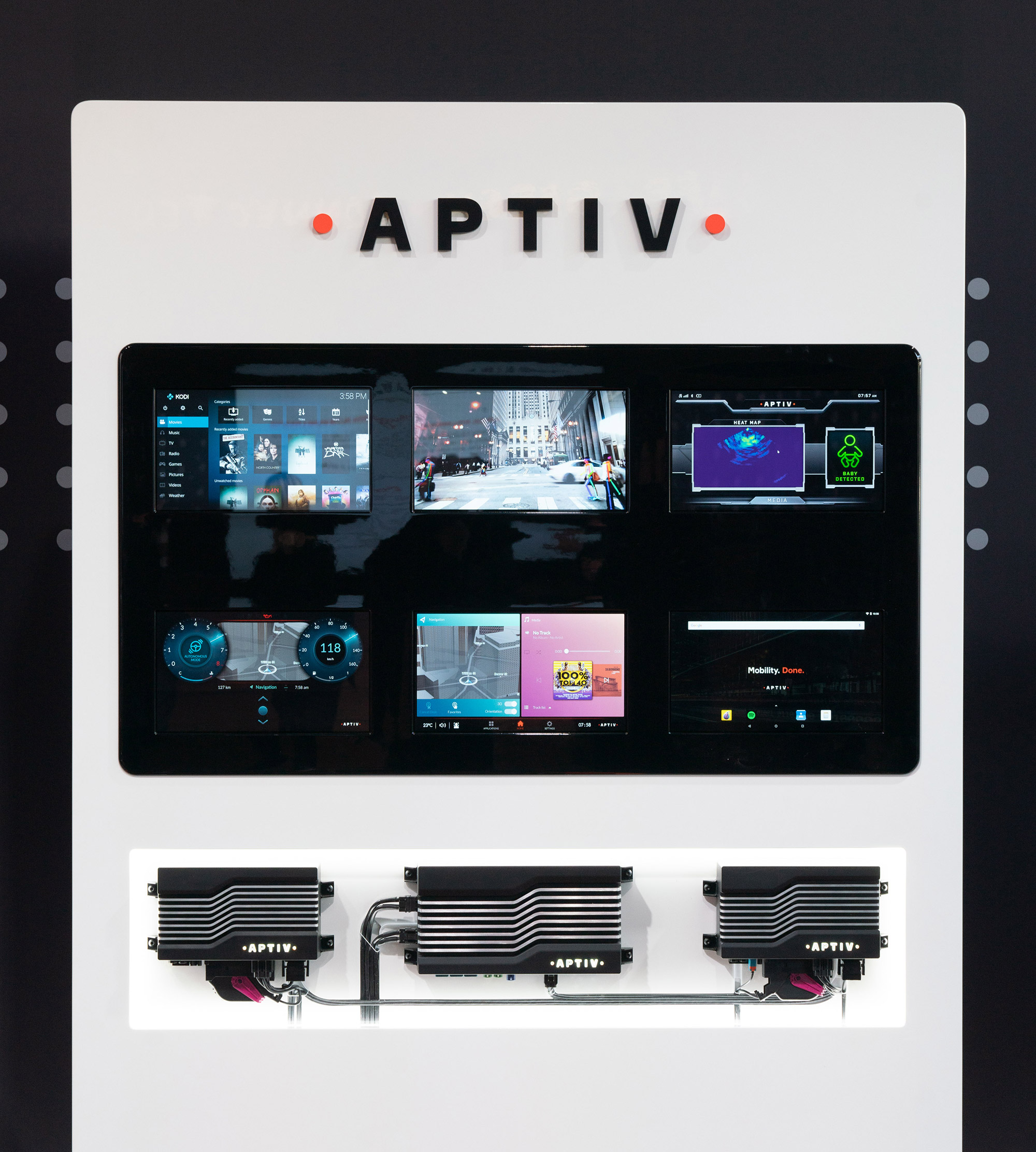
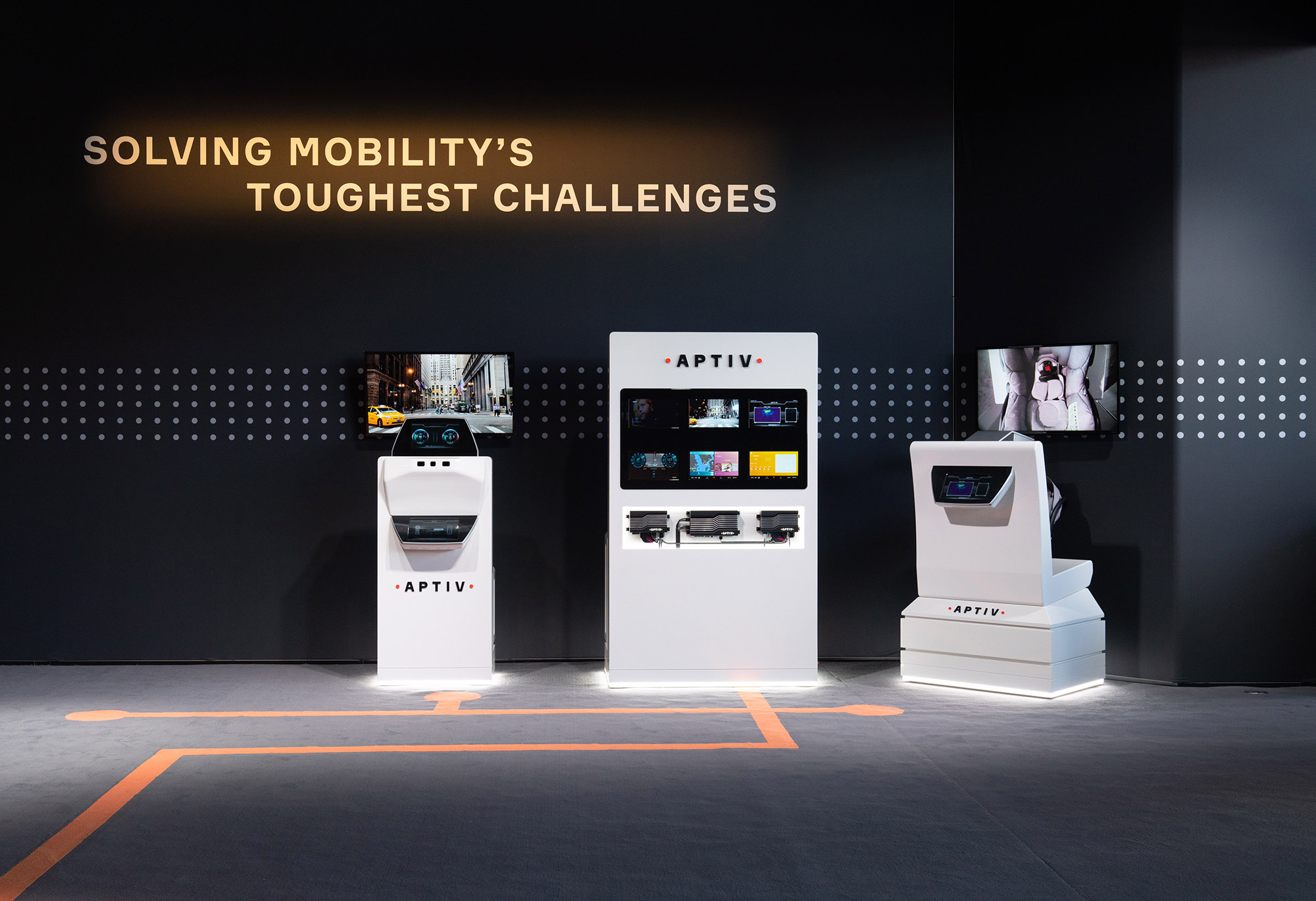
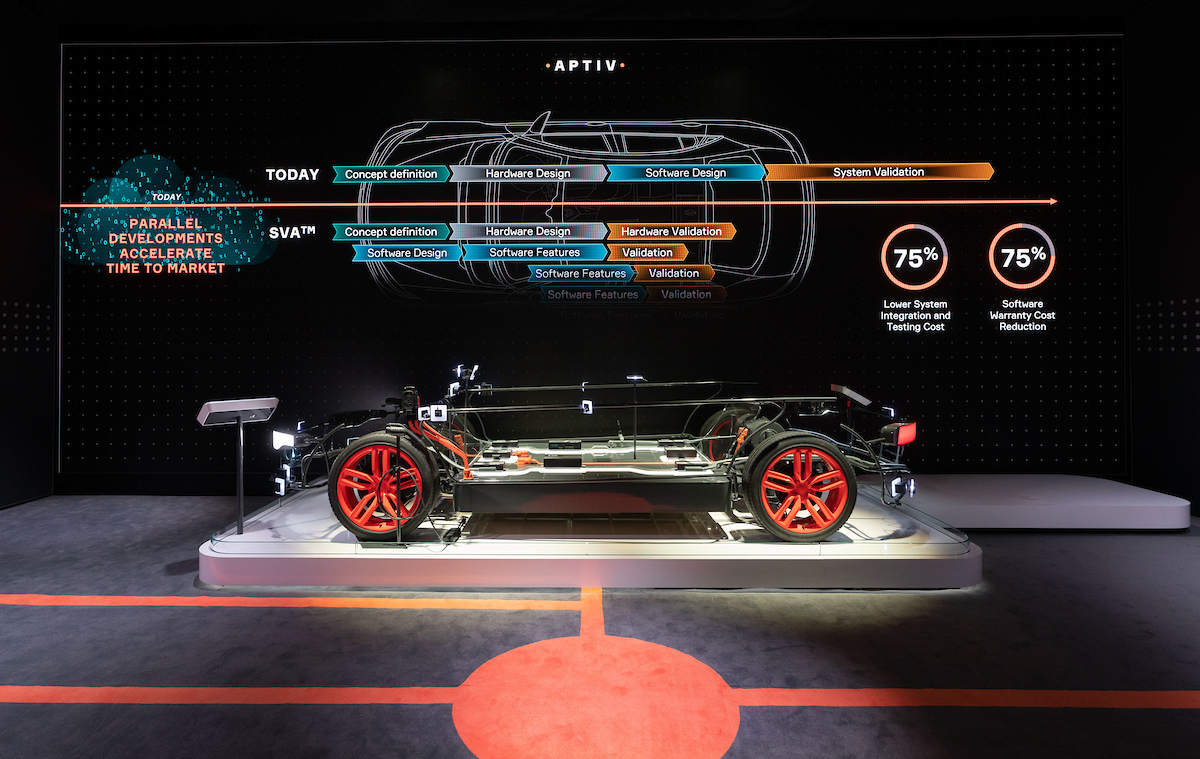
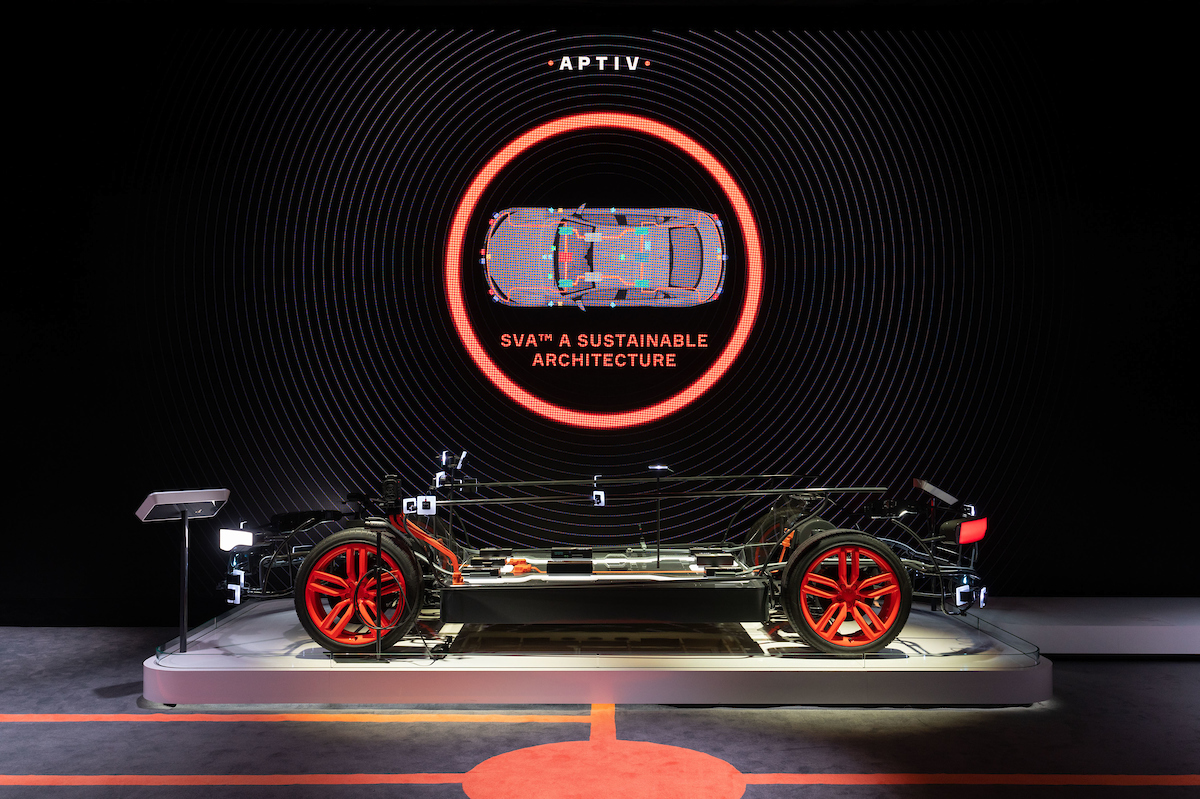
At the center of Aptiv’s presence at the show was Smart Vehicle ArchitectureTM, Aptiv’s vision for electrical and electronic systems to lower total cost of ownership while enabling feature-rich and highly automated vehicles.
Aptiv Unveils Smart Vehicle Architecture™
Aptiv’s expertise in software and systems integration, combined with its ability to provide automotive-grade compute and signal and power distribution inside the vehicle, sets the company apart from others looking to help OEMs address vehicle electrical and electronics complexity.
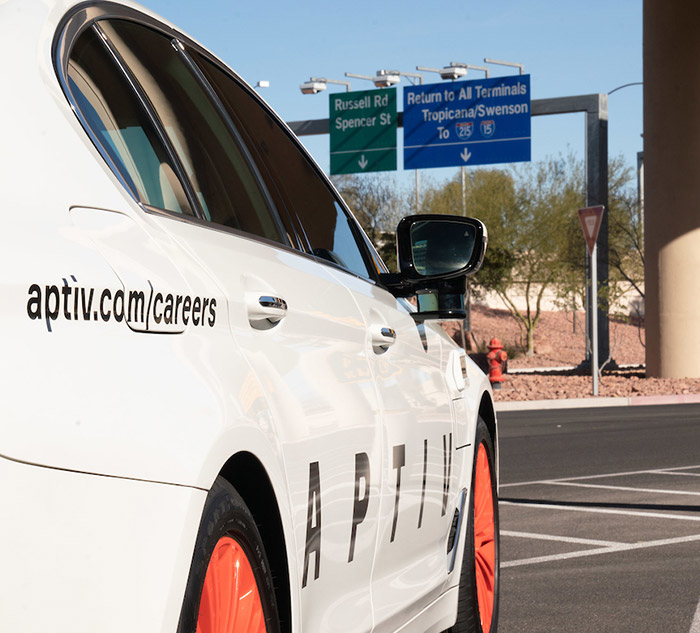
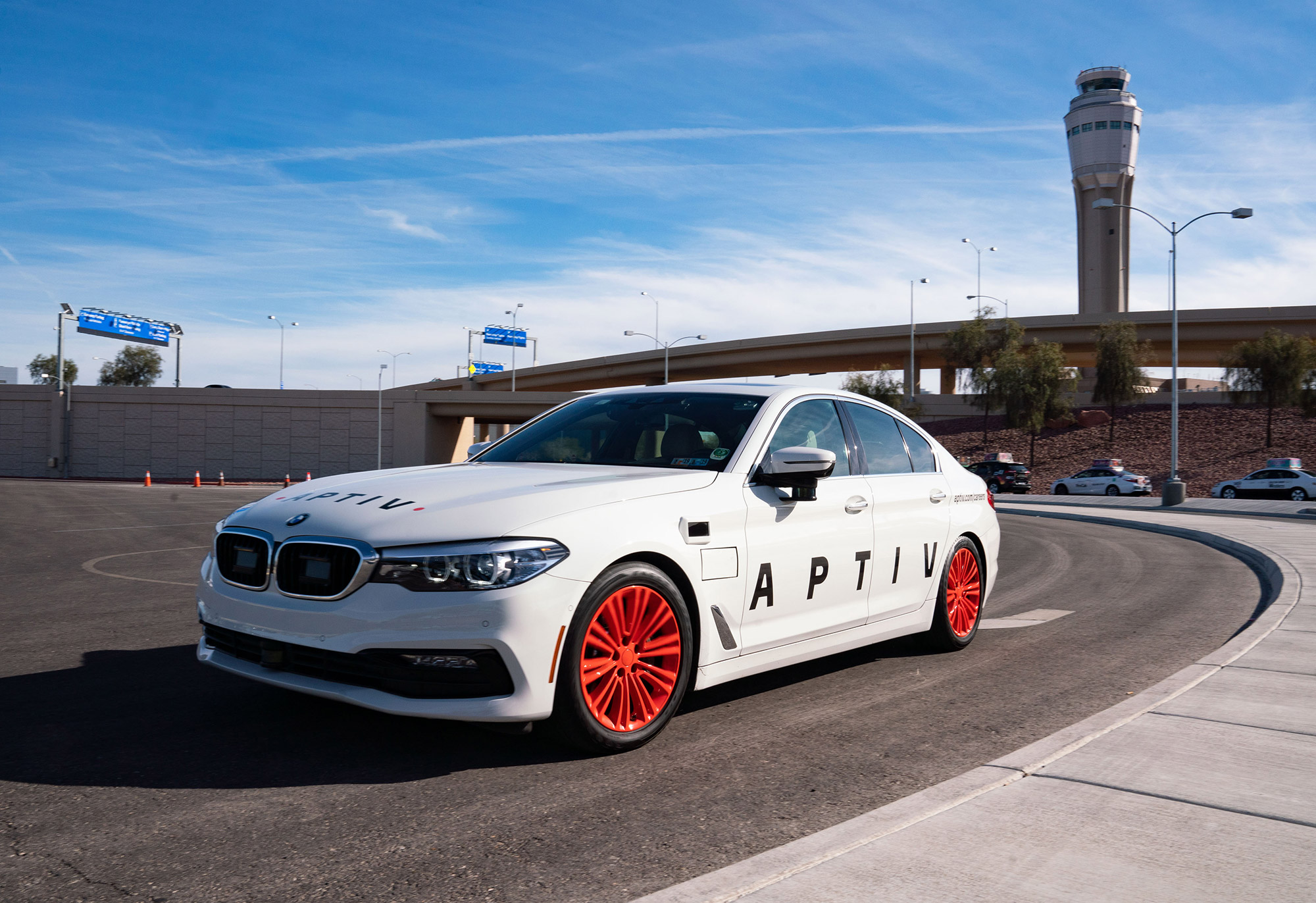
Aptiv Self-Driving Vehicles Arrive at McCarran International Airport
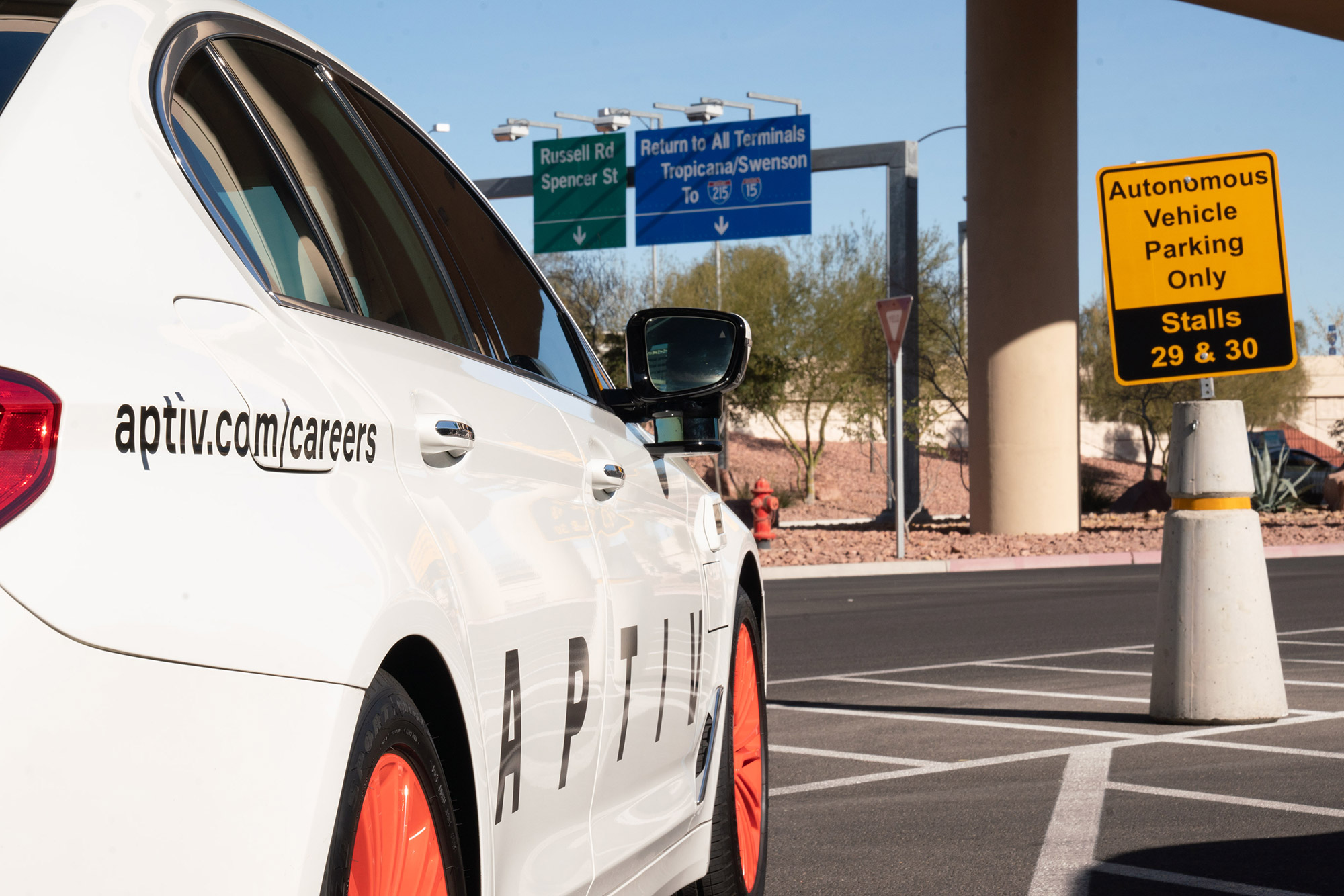
Aptiv has been awarded access to pick up and drop off a select group of passengers via its self-driving vehicles at the McCarran International Airport in Las Vegas. This first-of-its-kind airport access to autonomous vehicles will aid in the company’s development of a production-ready Level 4 autonomous driving platform in 2022.
Our featured technologies

Enabling scalable solutions by transitioning to a software defined vehicle
- Today’s feature rich, highly automated vehicles are creating enormous complexity challenges
- SVATM is a sustainable architecture that lowers total cost of ownership while enabling feature rich vehicles over their full lifecycle
Democratizing Advanced Safety and Autonomous Driving Technology
- Accelerating product lifecycles and increasing regulation requires flexible and scalable solutions
- Scalable platforms enable new functionality with maximum reuse and streamlined validation


Enabling seamless connectivity between passengers, the vehicle and the world around it
- Exponential increases in data generation, transfer and utilization are enabling new insights which are transforming the vehicle
- Our edge processing, data analytics and modular approach to software is unlocking new data insights and use cases
Leading in electrification and architecture optimization capabilities
- Challenging emissions targets globally are demanding new approaches to vehicle efficiency
- Comprehensive portfolio of High Voltage solutions supports electrification

Image Gallery





Feature Stories
From sensors to software to data to the cloud – we offer a holistic integrated approach.
Aptiv Introduces Advanced Occupancy Classification, The Industry’s First Camera-Only Occupant Detection System
Aptiv’s Advanced Occupancy Classification (AOC) delivers smarter safety, simpler design and up to 40% lower system cost
SCHAFFHAUSEN, Switzerland, June 8, 2026 — Aptiv PLC (NYSE: APTV), a global industrial technology company, today announced the launch of its Advanced Occupancy Classification (AOC) system, the industry’s first occupant detection solution powered entirely by an in-cabin camera. The system simplifies vehicle architecture by eliminating traditional in-seat hardware while enabling next-generation cabin intelligence.
Built on more than two decades of Aptiv leadership in occupant detection, AOC is an advanced software solution that leverages artificial intelligence (AI) and computer vision to accurately classify occupants based on parameters such as height, weight, and body position. This enables optimized airbag deployment decisions while significantly reducing system complexity and cost for automakers.
“Aptiv’s Advanced Occupancy Classification represents a strategic leap forward in cabin innovation,” said Matthew Cole, Senior Vice President, Sensors and Compute, Aptiv. “By moving to a camera-only architecture, we are leading a new generation of intelligent, software-defined safety features enabled through a single sensor. AOC provides automakers with a smarter, more scalable foundation for the future of the in-cabin experience, delivering the proven performance, safety and reliability they expect from Aptiv.”
Unlike conventional pressure‑based occupant detection systems, AOC can work with most existing vehicle interior cameras to accurately distinguish adults, children, infants in carriers, and inanimate objects, while also recognizing posture, size, seating position, and orientation. This enables the airbag system to suppress deployment or tailor inflation force and timing to reduce injury risk — especially important for children, smaller occupants, or out-of-position passengers.
Advanced Occupancy Classification achieved 100% accuracy across federal regulatory tests, including those evaluating how vehicles must protect occupants in frontal crashes under FMVSS 208 regulation, supporting global safety compliance and requirements.
Video can be downloaded from Vimeo.
A Platform for Smart‑Cabin Intelligence at Lower Cost
By removing airbag in‑seat hardware, AOC significantly streamlines system architecture. A single interior camera replaces multiple sensors and wiring, lowering bill‑of‑materials cost by up to 40% while reducing assembly effort and improving scalability across vehicle platforms.
The simplified architecture also gives automakers greater flexibility, enabling thinner seat profiles and easier integration of comfort features such as heating, cooling and massage, without compromising safety performance.
OEMs can also leverage the same interior camera to deliver more than 15 additional safety and comfort functions, including seatbelt-status monitoring, driver-attention tracking, gesture recognition, body‑pose analysis and hands-on-wheel detection, among others.
Aptiv’s machine learning and logic fusion capabilities integrate inputs from multiple sensors, AI models and key vehicle data to deliver highly stable, robust occupant classification, while the over-the-air upgradable system provides OEMs with a future-resilient solution that adapts as safety regulations evolve. This reduces redesign costs, extends hardware life, and enables new features over time without adding sensors or increasing integration complexity.
Advanced Occupancy Classification extends Aptiv’s commitment to continuous innovation and helping customers deliver safer, more intelligent, and more cost‑effective vehicles.
AOC will be showcased as part of a live vehicle demo at InCabin USA stand 20, taking place June 9–11, 2026, at Huntington Place in Detroit. Beyond AOC, the display will highlight additional Aptiv’s driver and cabin monitoring features, Cockpit Sound Suite, Android Automotive Framework and more.
To learn more, visit Aptiv’s AOC webpage.
About Aptiv
Aptiv PLC (NYSE: APTV) is a global industrial technology leader delivering advanced solutions people trust when it matters most across automotive, commercial vehicle, aerospace and defense, telecom and datacom, and other diversified industrial end markets. Our differentiated portfolio enables devices and systems to sense, think, act, and continuously optimize performance. Building on decades of innovation, Aptiv brings global scale and a resilient, localized value chain to customers across the globe. Learn more at Aptiv.com.
--------
Q&A
Q: WHAT IS ADVANCED OCCUPANCY CLASSIFICATION (AOC)?
A: Advanced Occupancy Classification (AOC) is the industry’s first camera-only occupant detection system, marking a major step forward in how vehicles understand and protect the people inside them, while reducing complexity and lowering system costs by up to 40 percent.
Q: WHAT MAKES THIS SYSTEM UNIQUE?
A: Instead of relying on pressure sensors located inside the seat, as most current systems do, our system uses advanced software and a single interior camera to understand critical cabin information such as the occupant’s height, weight and seating position, allowing the airbag deployment to be optimized in the event of a collision.
This enhanced perception is particularly important for children, smaller adults, or occupants who are seated incorrectly—for example, with their feet on the dashboard.
Q: WHAT OTHER IN-CABIN FEATURES DOES THE SYSTEM ENABLE?
A: With our exclusive Advanced Occupancy Classification system, a single interior camera can now support more than 15 additional in-cabin safety and comfort features, including seatbelt-status monitoring, driver-attention tracking, and gesture recognition.
This helps vehicles become smarter and more responsive, while also reducing system complexity and overall costs. Many of these features are likely to be mandated by upcoming safety regulations, so we are future‑proofing our technology at launch.
Q: WHAT ARE THE BIGGEST BENEFITS FOR AUTOMAKERS?
A: AOC offers a simpler design, lower cost, and long-term flexibility.
By eliminating hardware inside the seat, manufacturers can reduce parts, wiring, and assembly steps. This makes vehicles easier to build and easier to scale across different models.
Advanced Occupancy Classification also helps lower total system costs — in some cases by up to 40 percent — because a single camera replaces multiple hardware components.
And since the solution is software-based, automakers can update and expand features over time without changing hardware, helping vehicles stay current for longer and reducing redesign work down the line.
Q: WHAT DOES ADVANCED OCCUPANCY CLASSIFICATION (AOC) SAY ABOUT APTIV’S BROADER PRODUCT VISION?
A: We have been building and deploying an integrated technology stack for automotive applications for decades, across millions of vehicles globally.
We know how to deliver solutions that are scalable, modular in design, and software ‑driven.
Our AI-enabled platforms can be scaled across multiple products and industries. Advanced Occupancy Classification (AOC) is the latest example of this approach. We have additional exciting products in the pipeline and we can’t wait to share them very soon.
###