Built for Impact: SRS Connectors Trusted in Safety-Critical Applications
Safety restraint systems (SRS) rely on dedicated connector interfaces that maintain low-resistance, fail-safe electrical paths between crash-detection modules, electronic control units, and devices such as airbags, seatbelt pretensioners and high-voltage battery disconnects.
Decades of engineering innovation have addressed key failure risks — electrostatic discharge (ESD), pin damage, partial mating, mis-mating and environmental stress — through features such as scoop-proof designs, protected terminals and shorting bars. These innovations also include controlled locking mechanisms that improve mating reliability and assembly safety through passive features such as connector position assurance (CPA) or active features such as springlock designs.
Beyond automotive applications, connectors for pyrotechnical devices now support personal mobility devices, electrified industrial machinery and other electrified systems that require redundant battery disconnect capability, including off-highway machinery and stationary energy storage systems. In short, the connectors’ proven performance in automotive is addressing many other use cases where systems must operate without failure.
The latest global standards — such as ABX-5 and AK-2, which have been incorporated into the common ISO 19072 and United States Council for Automotive Research (USCAR) standards — reflect the industry’s push toward harmonized, safer and more robust connector architectures. Together, these innovations position connector technology as a critical enabler of lifesaving performance.
SOLVING FOR SAFETY
When a crash happens, airbags must deploy within 50 milliseconds of impact — but they must never release prematurely. Year in and year out, they have to remain primed and ready for an emergency that hopefully never comes.
The connectors serving those airbags are key to their success. They must ensure fail-safe behavior and long-term electrical stability despite a lifetime of vibration, temperature cycling and humidity changes. And they must do this while meeting increasingly stringent requirements for performance, reliability and cost. Automotive engineers have innovated solutions for every step of the challenge, developing squib connectors that work so reliably and at such a low cost that their usefulness is now extending far beyond automotive into applications as wide-ranging as inflatable bicycle helmets and safety switches in high-voltage systems.
Whether in ground-based or aerospace implementations, connectors have become so cost-effective that their complexity may be overlooked. In truth, getting a modern SRS connector to work properly requires an understanding of engineering that spans from classic pyrotechnics to the latest advances in mechanical, electrical and materials sciences.
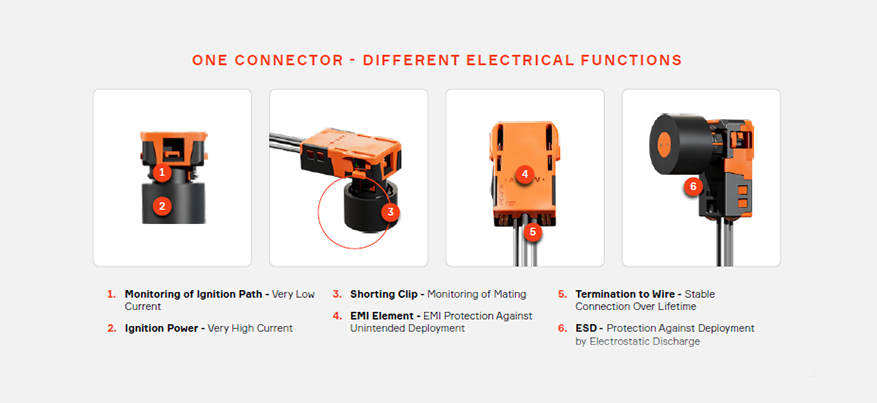
Fig. 1 A well-designed connector should respond to multiple electrical requirements.
SRS ARCHITECTURE
Airbags are only the most visible layer of a safety restraint system; altogether, an SRS is an integrated network of sensors, control electronics, pyrotechnic devices and mechanical modules designed to protect vehicle occupants during a collision. At its core is the crash-detection network, which typically includes accelerometers, impact and pressure sensors, and rollover-detection units that continuously monitor vehicle dynamics. These sensors relay data to the SRS electronic control unit (ECU), the system’s central decision-making hub. The ECU analyzes crash signatures in real time while also performing continuous diagnostic checks to ensure SRS reliability.
In electric vehicles, the same principle has been adapted for high-voltage battery disconnect units. Instead of inflating an airbag, the actuator severs the electrical connection between the battery’s high-voltage circuit and the rest of the vehicle. This helps protect occupants and first responders from exposure to dangerous electrical current following an accident.
SRS SYSTEM AND COMPONENTS - FACTS & FIGURES
Triggering and expiration of the airbag ignition
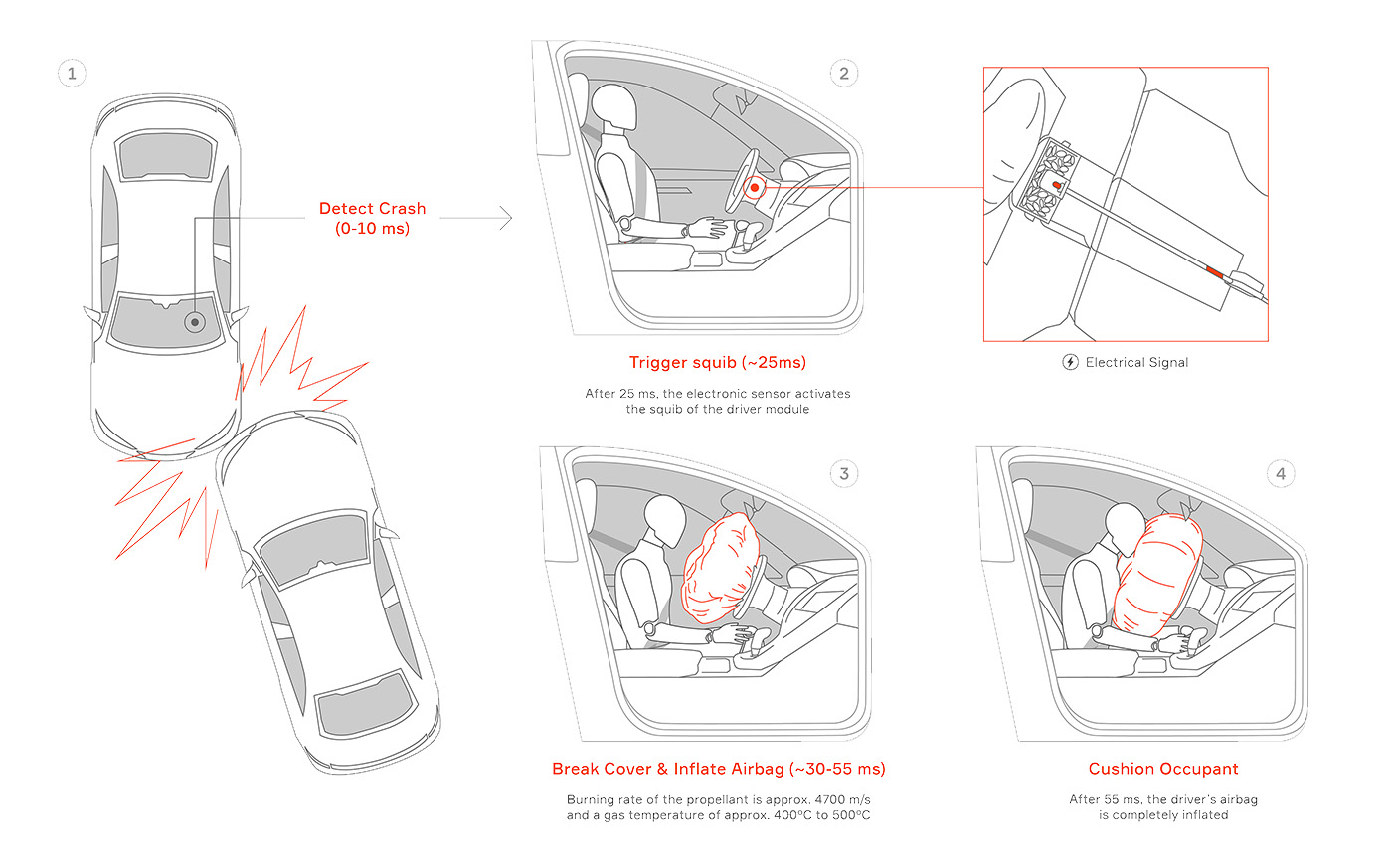
Fig. 2 How airbag ignition is triggered and expires.
COMPONENTS
There are three important components in SRS.
Squibs, or pyrotechnic actuators, form the link between electronic commands and mechanical deployment of safety devices. The term “squib” can be traced back to artillery applications, as a small ignition tube made from parchment or quill that could be used to light a cannon’s propellant. Hundreds of years later, modern squibs operate on a similar principle: An electrically activated element initiates a controlled pyrotechnic reaction inside airbag inflators, seatbelt pretensioners or EV battery disconnect units. When the ECU determines that deployment is necessary, it sends an electrical signal to the squib, which generates the heat necessary to activate the associated safety module. Because this interface is critical, squib connectors must maintain extremely low contact resistance and robust mechanical performance under varied environmental stresses.
Retainers define the interface and ensure that the squib mates securely and that the terminals complete the circuit to the inflator pins. They provide optimized retention and coding options to ensure a range of selections are available for the growing number of vehicle applications.
Inflators, or gas generators, convert the squib-initiated reaction into the gas required to deploy airbags or, in the case of a pyrofuse, convert the reaction into the mechanical energy needed to sever a conductor. Depending on the design requirements, inflators may rely on solid propellants, hybrid gas-and-pyrotechnic mixtures or stored compressed gas. Regardless of type, the inflator must deliver a tightly controlled gas flow within milliseconds. Airbag modules, which combine the inflator with a folded textile cushion, are engineered to deploy along a specific trajectory that accounts for occupant position, seating geometry and crash kinematics. Variants include driver, passenger, side, curtain, knee and pedestrian-protection airbags.
Importantly, each connector interface type must be carefully chosen to fulfill design considerations.
PYROTECHNICAL SAFETY SWITCHES AND CLOSING DEVICES
Pyrotechnical Safety Switches disconnect the power source from the circuit board in less than a millisecond.
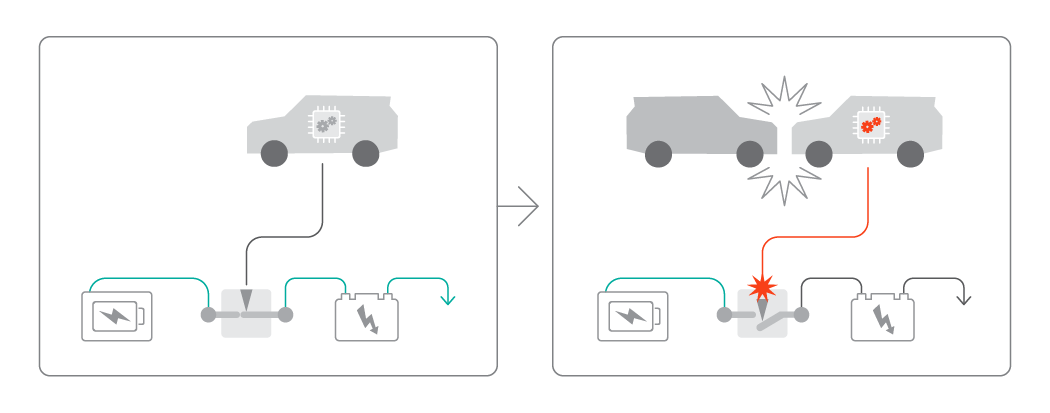
Fig. 3 The power source is disconnected from the circuit board in less than a millisecond.
DESIGN CONSIDERATIONS
To this day, the need for reliably secure connections, no matter the circumstance, has driven most of the major innovations in connector design. The interface must provide mechanical robustness while preventing failure modes related to partial mating. Unlike many other automotive systems, the SRS network has virtually zero tolerance for intermittent contact.
SRS connectors must meet very high retention force requirements to ensure that once the connector is installed, it remains fully seated throughout the vehicle’s lifespan, even under crash-level loads and severe shock events, particularly in multistage devices. At the same time, the system must allow consistent, ergonomic mating at the assembly line. These mechanical characteristics often differentiate one interface family from another and influence OEM selection decisions.
The earliest connector interfaces featured an open-pin design with a simple retainer. However, this configuration introduced a significant reliability issue: During assembly, technicians — especially in blind mating conditions — could inadvertently make contact with the exposed pins, leading to bent terminals and resulting in field failures. To address this, the industry shifted toward interfaces that incorporate pin protection features, enclosing the pins within a protective housing. This led in turn to the innovation of scoop-proof interfaces, which are engineered so that the mating connector cannot touch or damage the pins, even under the worst insertion-angle or handling conditions. This is why they are also referred to as “Kojiri-safe,” after the protective tips on the scabbards of Japanese swords.
Preventing partial mating at the assembly plant is another essential requirement. The interface must guide the connector smoothly and correctly onto the pins, regardless of operator technique. To achieve this, retainer and connector designs incorporate mechanical keying (coding) to prevent mis-mating or incorrect installation. Visual identification features, such as color, are also used to support assembly.
Shorting Strategy
When a connector is partially mated — even for a fraction of a second — the exposed pins can touch or come close enough for electrostatic discharge to result in unintended ignition (pre-firing). There are several solutions to mitigate ESD risk during handling, shipping and vehicle assembly. A common implementation is a shorting bar integrated into the retainer. In the unmated state, the bar bridges the terminals. When the connector is pushed through the retainer during installation, the shorting bar is mechanically displaced, opening the short and allowing current to flow from the ECU to the airbag igniter only once the connector has been fully and correctly seated. This measure prevents accidental discharge, provides shipping and assembly safety, and ensures that the circuit becomes active only at the intended point in the manufacturing process.
- An AK-2 interface with CPA and a springlock design that has the shorting bar located in the retainer
- An ABX-5 CPA design, which integrates the shorting bar into the connector
- An ABX-5 springlock, which eliminates the shorting bar and relies on the robustness of the igniter’s design
The shorting function in the CPA design enables mating-state monitoring. In springlock mating, the monitoring is done via spring and push-out functions.
In addition, actuation strategies can be uniquely tailored. For example, both springlock and CPA connectors have a CPA, but in springlock designs the CPA is integrated and mechanically protected to prevent unintended actuation or damage during handling and assembly.
While the shorting bar is a good solution to the ESD challenge, as a separate component it adds to both material and assembly costs. The imperative to reduce costs drove an innovation used in ABX-5 connectors: By relying on advancements in inflator technology to manage ESD risk, ABX-5 designs eliminate the shorting bar from the retainer while maintaining the option to integrate the shorting function directly into the connector, depending on the interface variant. The revised approach reduces tolerance-stack complexity during mating, contributing to improved assembly robustness.
SRS CONNECTOR EXAMPLES
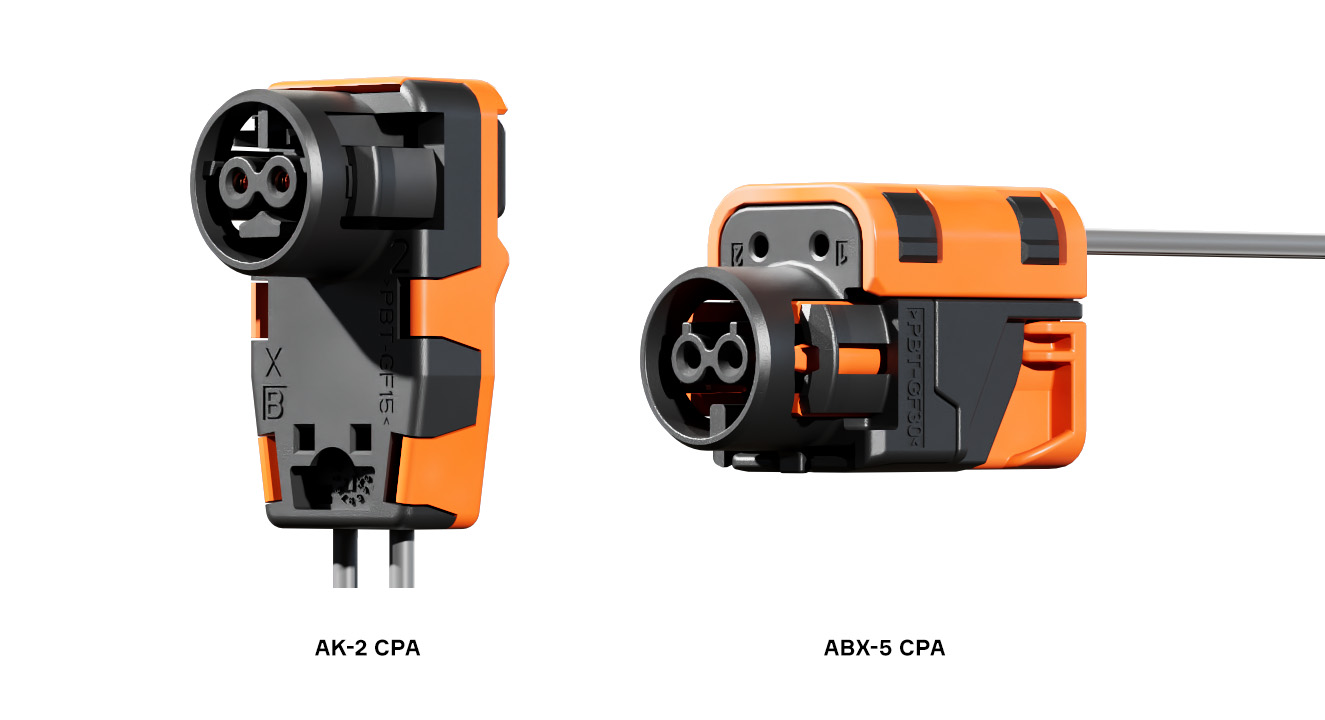
Fig. 4 SRS connectors come in various shapes and sizes.
PROCESS AND PLATING
Material selection plays a critical role in the overall performance and long-term reliability of SRS connectors. The resins used in the housings, for example, must withstand elevated temperatures, mechanical stress, and environmental exposure over the life of the device.
Beyond the connector housing, one of the most significant ongoing areas of development involves the terminal system. Each connector contains
two terminals that are typically crimped or resistance-welded to the wire during automated assembly. Resistance welding has gained traction in the industry as the preferred connection technology for squib connectors, rather than the mechanical crimp of terminal to wire.
Either way, historically these terminals have been plated with a relatively thick layer of gold. While gold provides excellent electrical performance and corrosion resistance, it is also costly and increasingly unsustainable, from both an environmental and supply-chain perspective.
Cost pressures continue to be a major driver behind innovation and, along with environmental concerns, continue to propel the development and validation of alternative solutions. Reducing gold usage delivers both cost and sustainability benefits, as CO2 output decreases nearly linearly with reductions in gold content. Today, global SRS terminals generally use a uniform specification — typically 0.8 microns of gold — across all regions, but the industry is already exploring alternative alloys and methods. One potential delay for widespread adoption of new approaches is that transferring any novel plating solution into SRS would require a complete validation program.
STANDARDS
Innovations Aptiv has developed and championed have caused several new standards to
emerge. Presently, the industry honors both modern interfaces aligned with current global specifications, and legacy interfaces still present in older system architectures.
Current and emerging standards include the following:
- AK 2 interface (ISO 19072 4). The AK-2 platform incorporates the industry’s first fully validated scoop-proof mechanical design. This prevents terminal deformation or shorting due to mating misalignments — an important failure mode identified in legacy connectors. The interface has subsequently been adopted as the preferred standard by ISO, the AK Consortium and USCAR due to its consistent performance under thermal, vibration and load-cycling conditions.
- AK2+ interface (ISO 19072-4). AK2+ represents an evolution of AK-2, incorporating targeted improvements for ESD resilience and addressing increased sensitivity in next-generation inflator electronics.
- ABX 5 interface (ISO19072-5). The ABX-5 architecture extends the AK-2 design framework while introducing improvements for compatibility with the latest inflator technologies. One of the primary objectives behind ABX-5 was system cost reduction. It eliminates the separate metal shorting bar integrated into the retainer to manage short-circuit protection during shipping and assembly.
ABX-5 is also notable for being the first SRS connector designed to be a global standard. Previous interfaces were adopted differently across regions, leading to variations in mechanical design, coatings and performance requirements. ABX-5, in contrast, was developed directly in alignment with the USCAR global standard, providing a unified platform that simplifies OEM adoption and enhances global manufacturing consistency.
J-AK. Once listed as a legacy standard, J-AK has been updated with a scoop-proof version and is widely used in the Japanese and Korean markets.
Earlier interface concepts such as FCI, AK-1, and certain UC variants remain in use in the field, although newer interface generations incorporate enhanced anti-scoop, ESD, and performance features.
BEYOND AUTOMOTIVE
While pyrotechnic squibs and their associated connector technologies originated in the automotive industry, many other mobility and safety critical sectors have begun to recognize their value, especially for two primary applications: pyrotechnic systems to protect occupants in a crash, and system-protection devices focused on safely and rapidly disconnecting batteries.
These new domains share many of the same engineering demands that shaped automotive SRS architectures: controlled activation, compact packaging, reliable electrical interfaces and stringent fail safe requirements.
Occupant protection
Just as in automotive, SRS connectors in other industries can serve the overriding aims of life preservation and injury reduction through crash energy management. Crash energy management involves creating a buffer that absorbs the energy of a crash. In these cases, pyrotechnic activation triggers the operation of safety gear, such as motorcycle safety vests, where a small inflator, triggered by a squib, rapidly deploys a protective air inflated vest during a fall. Even some bicyclists wear collar-mounted airbag systems that inflate around the rider’s head when crashlike motion is detected.
Similar principles extend into aerospace applications, where eVTOL aircraft use pyrotechnic devices for emergency separation, and business jets employ squib-based seat belt pretensioners adapted to aviation environmental and certification standards. These aerospace applications demand exceptionally high reliability and traceability. The controlled, one-time activation nature of pyrotechnic devices makes them well suited for emergency events where instantaneous and decisive mechanical action is required. Connector designs for this sector often draw directly from automotive SRS’s heritage but incorporate aerospace-grade materials, coatings and environmental sealing.
Battery disconnect
One of the fastest-growing non-automotive use cases for SRS is battery disconnect devices for electrified machinery. They are becoming increasingly important as agriculture, construction, logistics and specialized mobility platforms undergo electrification and face high-voltage safety challenges similar to those of passenger EVs. Agricultural equipment, forklifts, warehouse vehicles and rugged off-highway machines rely on pyrotechnic circuit interruption to prevent electrical or thermal hazards in crash or fault conditions, often using proven automotive-grade SRS squibs due to their established reliability and validation pedigree. Industrial and residential battery energy storage systems also rely on SRS connectors for quick and reliable disconnection of the battery circuit during critical safety events.
More uses
Additional emerging applications — including wearable protective systems for hazardous-environment workers, compact emergency deployment mechanisms in robotics and drones, and safety modules for recreational or adventure sports — reinforce the versatility of pyrotechnic actuation. Across all of these domains, the common thread is the need for small, robust, instantly responsive devices that protect users during sudden, unexpected events. Undoubtedly, use cases will continue to grow as more industries appreciate connector technology for its lifesaving value.
FUTURE ROLES
Looking ahead, safety-critical connectors will continue to play an essential role as vehicles and industrial systems become more electrified, automated and software-controlled. On the one hand, traditional airbag systems for occupant protection continue to expand in scope and performance requirements. On the other hand, electrified architectures are driving the adoption of pyrotechnic actuators designed for the rapid isolation of high-voltage energy sources in applications such as electric mobility and stationary energy storage. Together, these applications will continue to drive innovation in connector design, meeting higher requirements in packaging, cost and durability.
Beyond transportation, connectors will underpin next-generation wearable safety solutions, enabling ultrafast activation of airbag vests, exoskeleton-stiffening systems and fall-protection devices. Robotics, industrial automation and electrified heavy machinery will require equally reliable actuators for collision dampers, high-voltage isolation and emergency shutdown modules. In space, connectors are expected to support deployable shielding, autonomous module separation and habitat-integrity protection as lunar and Martian operations expand.
Each new application will bring its own particular design challenges, inspiring the next generation of engineers to a new level of innovation.