Evolution of Vehicle Architecture

smart-vehicle-architecture

Evolution of Vehicle Architecture

Evolution of Vehicle Architecture

The evolution of electronics brings vehicle architecture to a turning point

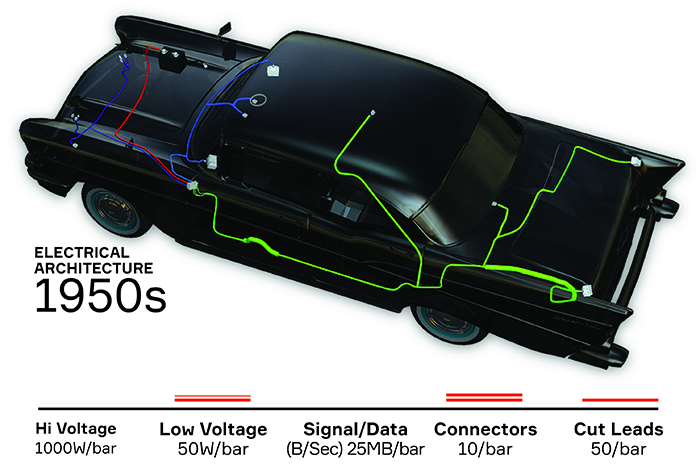
Ah, the 1957 Chevy Bel Air.

Not only a beauty on the outside, but a paragon of simplicity on the inside—at least when it comes to its electrical system. Very, very simple. But as vehicles have evolved over time, so has the electrical architecture. 

Jump ahead to the present day, where cars transfer more than 100,000 pieces of data in the blink of an eye.

Consumer demand for safety and software-enabled features is increasing at an unprecedented rate. This increase in software-enabled capability impacts infotainment, user experience, active safety and connected vehicle services, and paves the way for the ultimate application, autonomous driving.

As the demand for software-enabled features grows, there is a corresponding increase in the need for computing horsepower. Just like the latest iPhone has to add more computing power to run all the new apps, we need to add more computing horsepower to the car to run all the latest features.

What this means is that the traditional architecture approach will no longer be viable and support the growth in content and complexity. There isn’t enough computing power to run the vehicle’s complex software algorithms, and the networking infrastructure cannot support the data transfer speeds of the future.

A closer look at how electrical architecture systems have evolved over the decades helps explain this remarkable increase — and why the automotive world is shifting from a fragmented approach to the future: a software-defined digital platform.


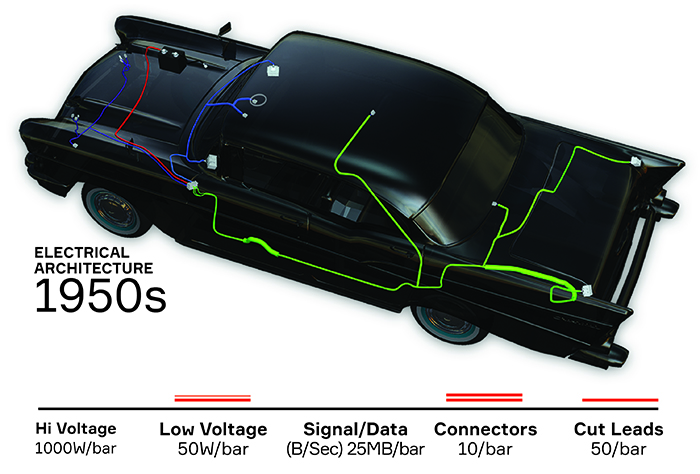
1950s: Simplicity 
Minimal Electrical Content, No Electronics

  • 12-volt systems reign
  • Ring terminals = primary connection method
  • 56/58/59 connections make their debut
  • Woven cloth coverings are standard 


Auto wiring through the ages-1950s


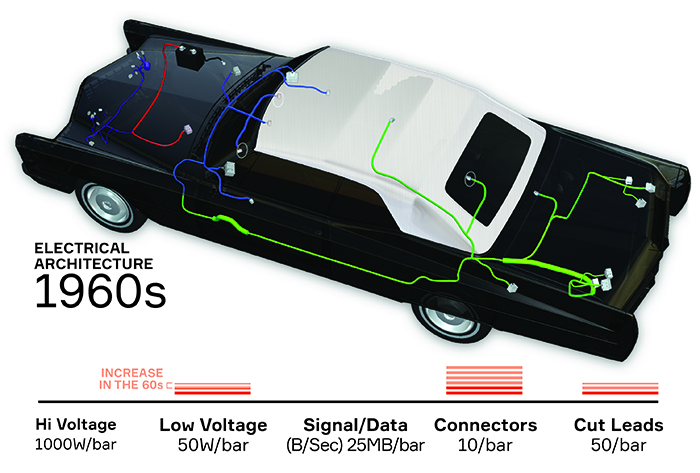
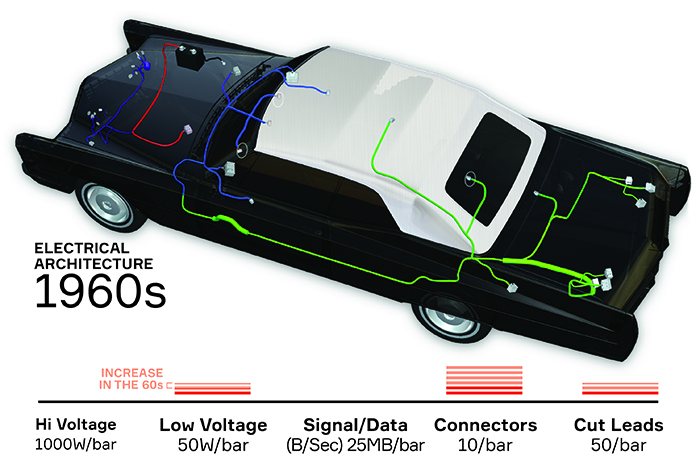
    1960s: Stability 
    Electrical Content Grows

    • Audio and lighting enhancements spur content growth
    • Glass fuse protections becomes standard
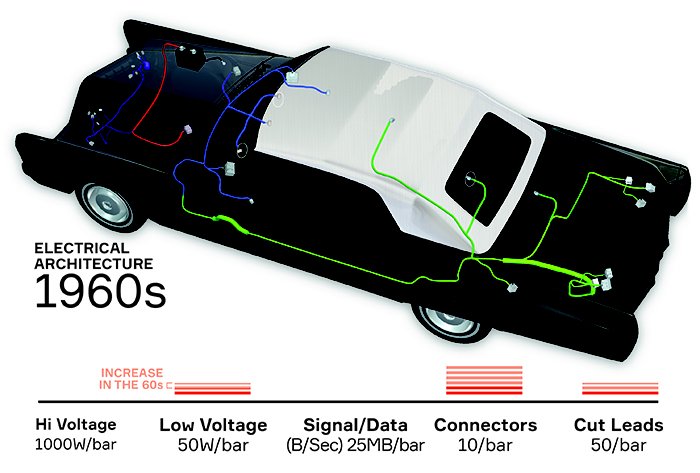
    1960s: Stability  Electrical Content Grows

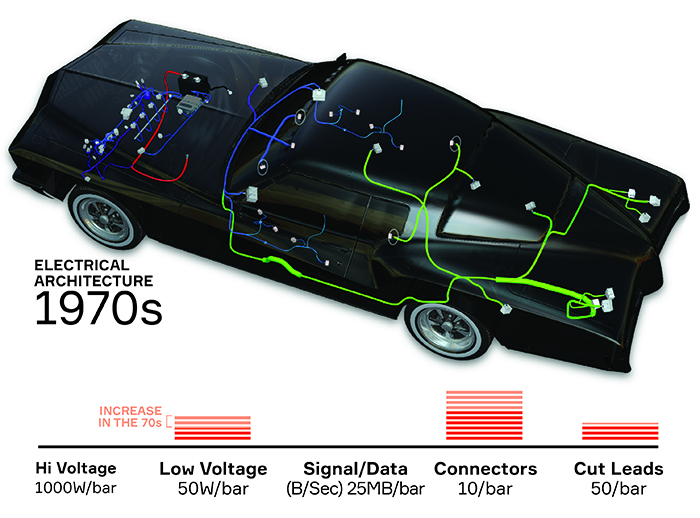
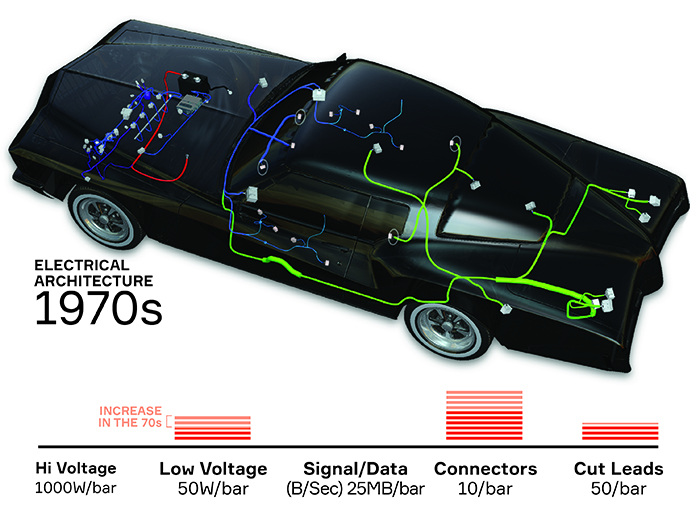
    1970s: Anticipation
    Electronics Join the Party

    • Emission requirements emerge, electronic modules follow
    • Circuit protection migrates to smaller footprint auto fuse (ATO)
    • Harness positioning begins to require systems expertise

    1970s: Anticipation  Electronics Join the Party

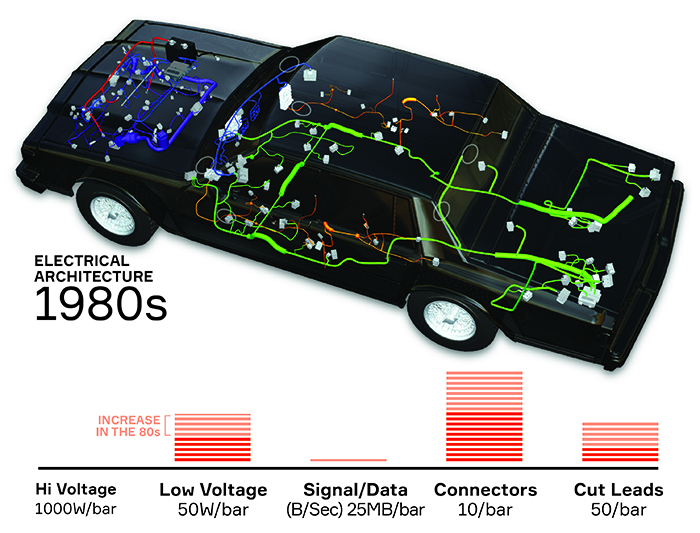
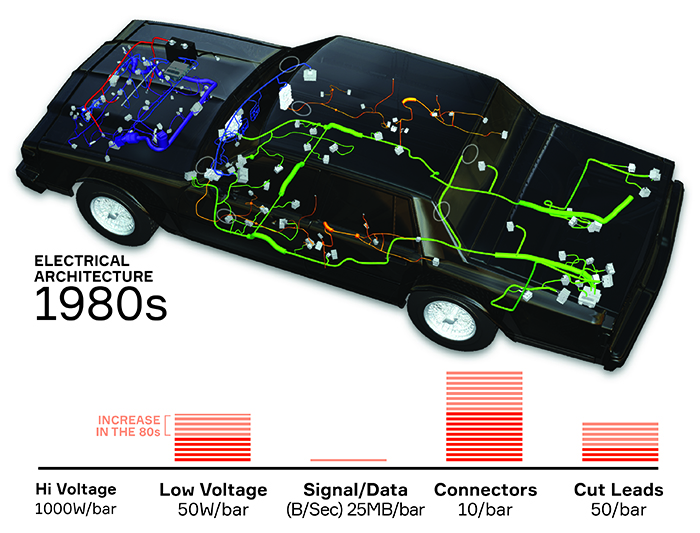
    1980s: Take Off
    Electronics Integration Means Electrical Growth

    • New regulations drive more electrical content
    • Sealed connections become best practice
    • Electrical partitioning and packaging reach new levels 
    • Electrical content growth fuels vehicle assembly plant concerns
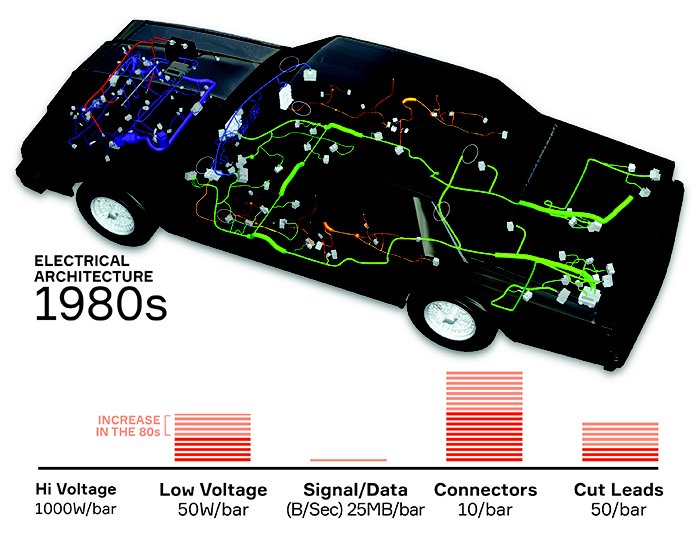
    1980s: Take Off   Electronics Integration

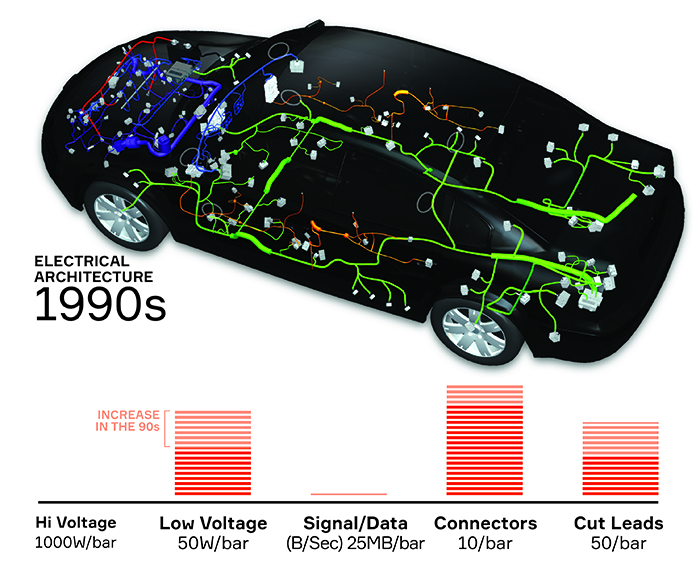
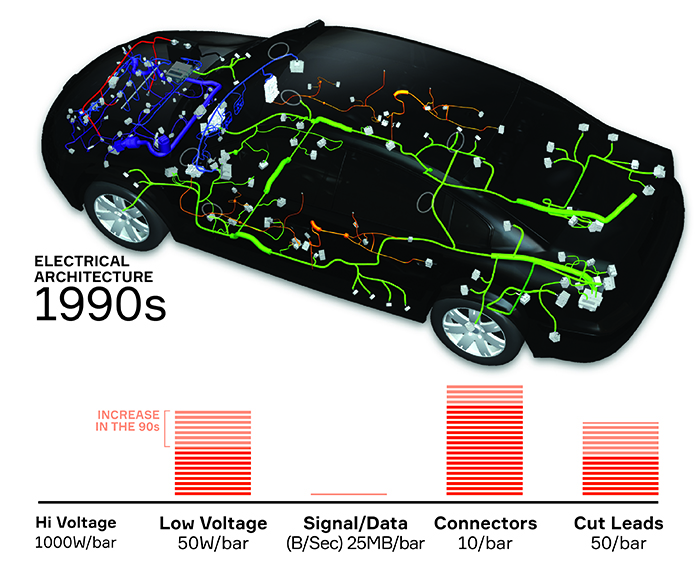
    1990s: Acceleration
    Architecture Expertise Becomes a "Thing"

    • Electrical centers redefine architecture standards and optimization
    • Complexity management becomes vehicle assembly plant focus
    • Cable and components miniaturization improves packaging
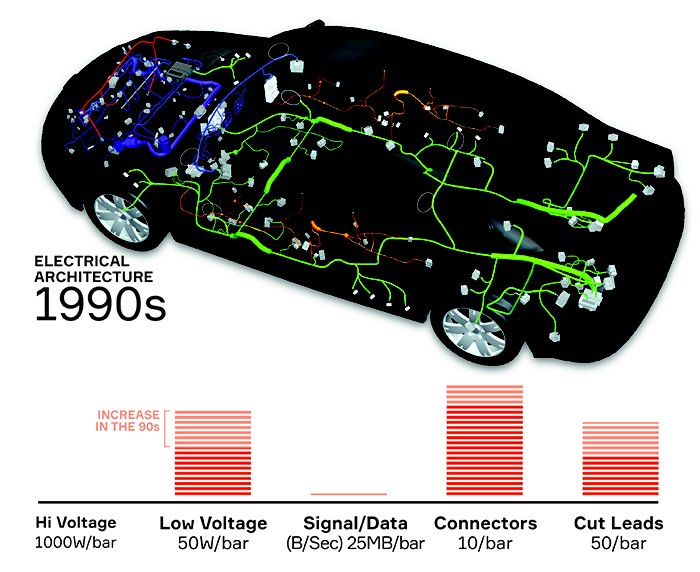
    1990s: Acceleration  Architecture Expertise


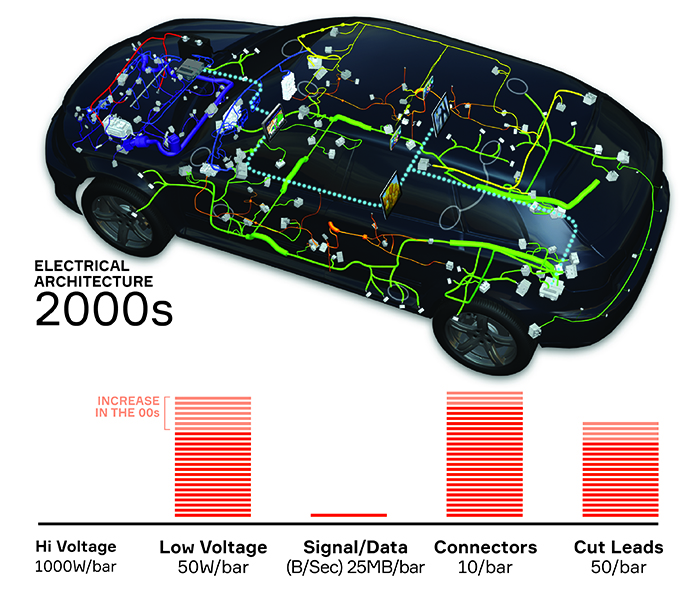
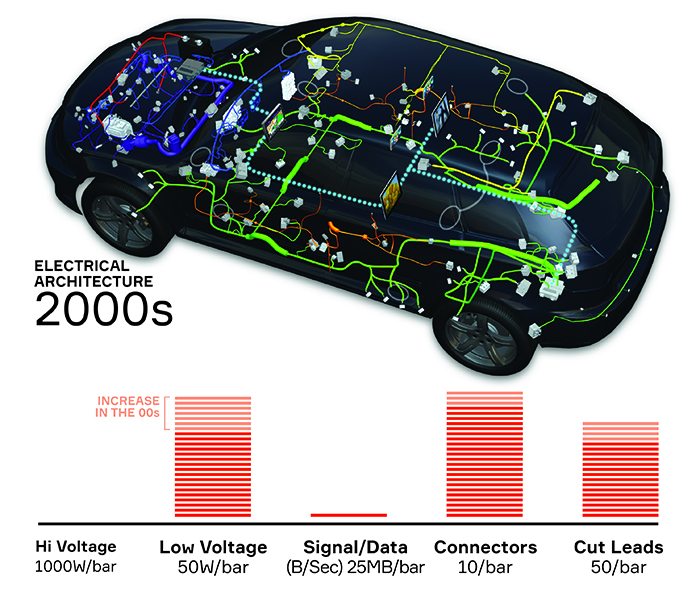
    2000s: More and More 
    Electronics Feed the Features/Functions Beast

    • Data and communication protocols drive new product requirements
    • “Optional” equipment becomes standard
    • More legislation = more content growth
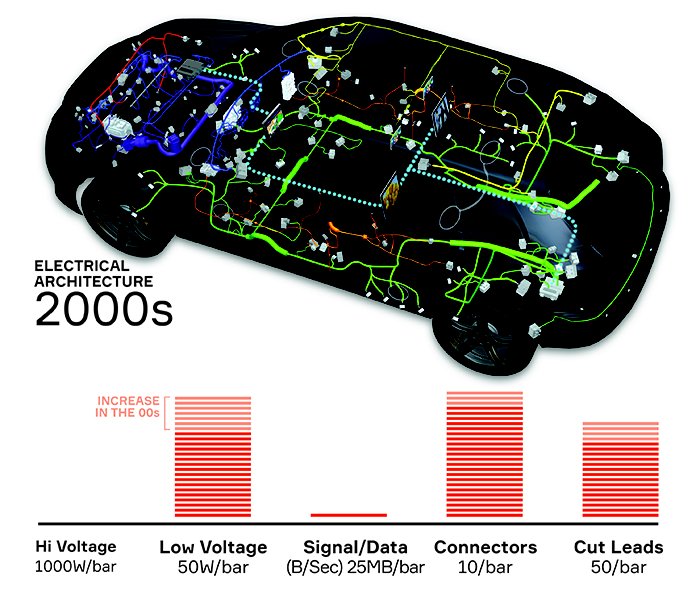
    2000s: More and More  Electronics Feed the Features/Functions Beast

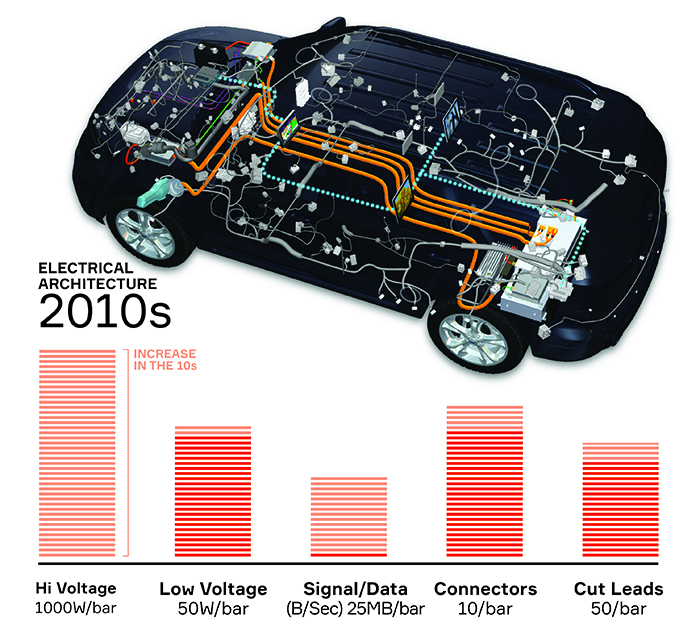
    2010s: Connectivity and Safety
    High-Power Management Takes Charge

    • Consumer electronics integration adds layers of complexity
    • Driver distraction becomes a social issue
    • Occupant safety spurs additional electrical content
    • U.S. fuel economy regulations drive high-voltage powertrains and systems
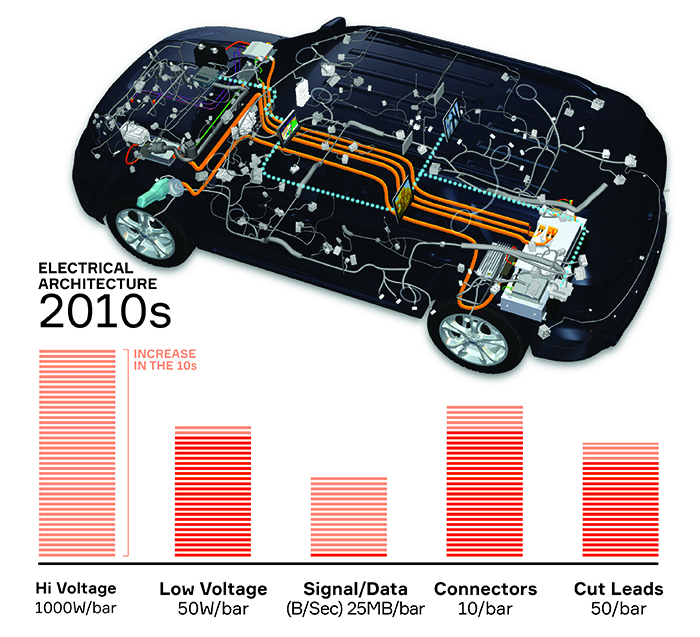
    Auto wiring through the ages-2010s


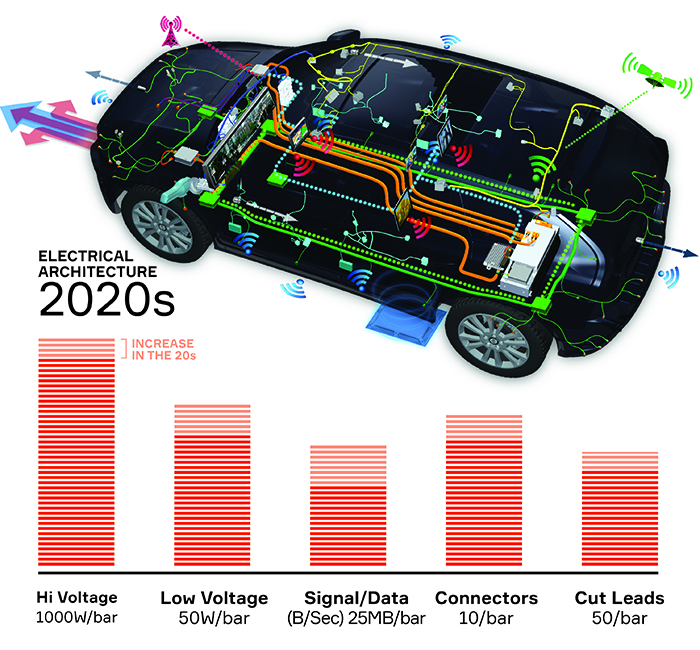
    2020s: Mobilization 
    On-Board Systems Are No Longer the Limit

    • Advanced connectivity and safety continue to drive next generation cables/connections
    • Legislation (safety, fuel economy, etc.) influences electrical growth and content
    • Advanced communication protocols beget new technologies
    • Cybersecurity concerns drive multi layers of redundancy and fault tolerances
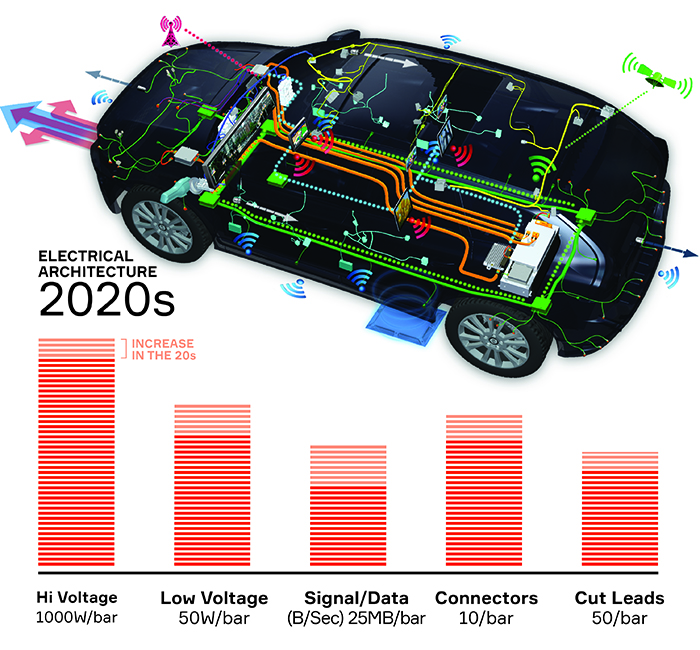
    Auto wiring through the ages-2020s

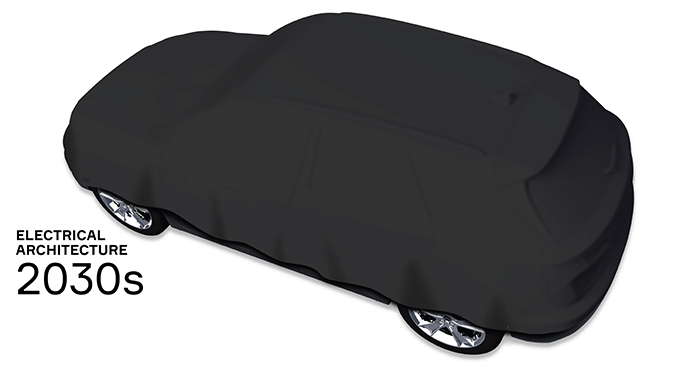
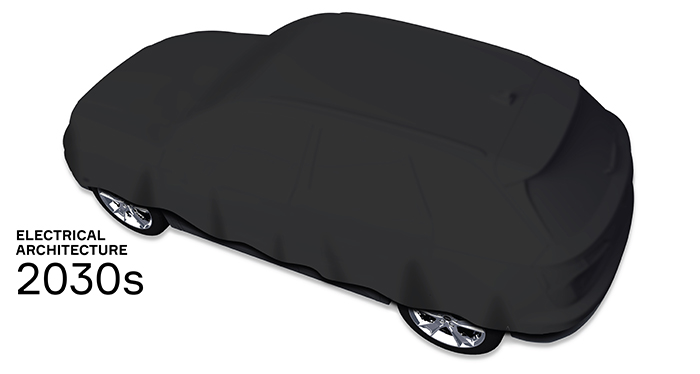
    2030s: Advanced Integration
    Safe, Green, Connected, All at the Same Time

    • Multi-voltage domains bring more layers of device electrification
    • Autonomous driving features create additional high-speed data networks
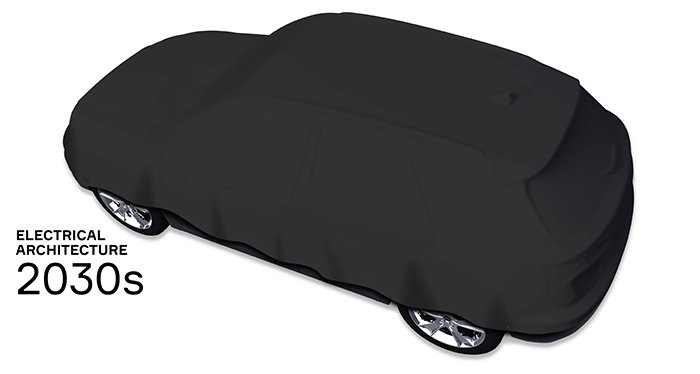
    2030s: Advanced Integration  Safe, Green, Connected

    The pictures tell the story.


    More features mean more computing power, more data and more power distribution than ever before. And as the car becomes a supercomputer, with more features and connectivity, its architecture or foundation needs to change radically. The historical vehicle architecture approach no longer works – it can’t support the growth in content and complexity. Aptiv has an extensive heritage of helping OEMs navigate the evolution of vehicle architecture, one that will continue as we look ahead to the coming decades.
    The evolution of electronics brings vehicle architecture to a turning point

    Ah, the 1957 Chevy Bel Air.

    Not only a beauty on the outside, but a paragon of simplicity on the inside—at least when it comes to its electrical system. Very, very simple. But as vehicles have evolved over time, so has the electrical architecture. 

    Jump ahead to the present day, where cars transfer more than 100,000 pieces of data in the blink of an eye.

    Consumer demand for safety and software-enabled features is increasing at an unprecedented rate. This increase in software-enabled capability impacts infotainment, user experience, active safety and connected vehicle services, and paves the way for the ultimate application, autonomous driving.

    As the demand for software-enabled features grows, there is a corresponding increase in the need for computing horsepower. Just like the latest iPhone has to add more computing power to run all the new apps, we need to add more computing horsepower to the car to run all the latest features.

    What this means is that the traditional architecture approach will no longer be viable and support the growth in content and complexity. There isn’t enough computing power to run the vehicle’s complex software algorithms, and the networking infrastructure cannot support the data transfer speeds of the future.

    A closer look at how electrical architecture systems have evolved over the decades helps explain this remarkable increase — and why the automotive world is shifting from a fragmented approach to the future: a software-defined digital platform.


    1950s: Simplicity 
    Minimal Electrical Content, No Electronics

    • 12-volt systems reign
    • Ring terminals = primary connection method
    • 56/58/59 connections make their debut
    • Woven cloth coverings are standard 


    Auto wiring through the ages-1950s


      1960s: Stability 
      Electrical Content Grows

      • Audio and lighting enhancements spur content growth
      • Glass fuse protections becomes standard

      1960s: Stability  Electrical Content Grows

      1970s: Anticipation
      Electronics Join the Party

      • Emission requirements emerge, electronic modules follow
      • Circuit protection migrates to smaller footprint auto fuse (ATO)
      • Harness positioning begins to require systems expertise

      1970s: Anticipation  Electronics Join the Party

      1980s: Take Off
      Electronics Integration Means Electrical Growth

      • New regulations drive more electrical content
      • Sealed connections become best practice
      • Electrical partitioning and packaging reach new levels 
      • Electrical content growth fuels vehicle assembly plant concerns

      1980s: Take Off   Electronics Integration

      1990s: Acceleration
      Architecture Expertise Becomes a "Thing"

      • Electrical centers redefine architecture standards and optimization
      • Complexity management becomes vehicle assembly plant focus
      • Cable and components miniaturization improves packaging
      1990s: Acceleration  Architecture Expertise


      2000s: More and More 
      Electronics Feed the Features/Functions Beast

      • Data and communication protocols drive new product requirements
      • “Optional” equipment becomes standard
      • More legislation = more content growth

      2000s: More and More  Electronics Feed the Features/Functions Beast

      2010s: Connectivity and Safety
      High-Power Management Takes Charge

      • Consumer electronics integration adds layers of complexity
      • Driver distraction becomes a social issue
      • Occupant safety spurs additional electrical content
      • U.S. fuel economy regulations drive high-voltage powertrains and systems

      Auto wiring through the ages-2010s


      2020s: Mobilization 
      On-Board Systems Are No Longer the Limit

      • Advanced connectivity and safety continue to drive next generation cables/connections
      • Legislation (safety, fuel economy, etc.) influences electrical growth and content
      • Advanced communication protocols beget new technologies
      • Cybersecurity concerns drive multi layers of redundancy and fault tolerances

      Auto wiring through the ages-2020s

      2030s: Advanced Integration
      Safe, Green, Connected, All at the Same Time

      • Multi-voltage domains bring more layers of device electrification
      • Autonomous driving features create additional high-speed data networks
      2030s: Advanced Integration  Safe, Green, Connected

      The pictures tell the story.


      More features mean more computing power, more data and more power distribution than ever before. And as the car becomes a supercomputer, with more features and connectivity, its architecture or foundation needs to change radically. The historical vehicle architecture approach no longer works – it can’t support the growth in content and complexity. Aptiv has an extensive heritage of helping OEMs navigate the evolution of vehicle architecture, one that will continue as we look ahead to the coming decades.
      How helpful was this article?
      i


      ×

      Please let us know how helpful this article was, so we can provide you with the best content possible. If you have more feedback to share, please feel free to contact us.
      Thank you!