Managing Complexity, From Supply Chain to Manufacturing
Modern manufacturing is built on a vast web of interconnected relationships that stretches from raw materials and semiconductor fabs to logistics providers and final assembly plants. Every component represents a dependency, and every dependency presents potential trade-offs among cost, availability and risk.
Regardless of how innovative a product may be, large-scale production ultimately depends on the consistent flow of materials and components. Manufacturing excellence is therefore inseparable from supply chain excellence.
Both demand constant vigilance. Supply chain visibility requires extensive data collection, refinement and modeling that never stops. Likewise, keeping manufacturing quality high does not just happen — it requires rigorous processes, problem-solving, and testing and validation, day in and day out. And all of it has to be performed to global standards while empowering local facilities in an in-region, for-region approach.
The automotive industry has spent decades developing these capabilities under some of the world’s most demanding conditions. Few other sectors must simultaneously manage safety-critical products, global supply chains, regulatory compliance, aggressive cost targets and production volumes measured in millions of units. As domains such as robotics, drones, autonomous systems, aerospace, telecommunications, energy and advanced electronics seek to scale their own mission-critical technologies, they can benefit from automotive’s hard-won experience.
FROM INNOVATION TO EXECUTION
Everyone wants to be a technology innovator. The Wall Street Journal recently reported a doubling of computer science graduates who identify as “founders,” intent on propelling their own startups with fresh ideas about emerging technologies. Yet what often gets lost in the excitement of greenfield creativity is the crucial bridge between optimism and execution.
After the ideas, patents and pilot projects, the critical next step for young companies is scaling up. Even mature corporations can be vulnerable as they pursue growth and expand into new markets. To execute successfully at scale, companies must focus on two essential, interrelated components: supply chain and manufacturing.
In both supply chain and manufacturing, each step depends on the previous one, and they are all vulnerable to disruptions at any point. Even the most advanced operations can be derailed by a single missing component or unexpected constraint.
It is like the butterfly effect — a well-known metaphor for the way something as seemingly insignificant as a butterfly flapping its wings can have far-reaching downstream effects. Now imagine hundreds or thousands of butterflies representing every material, every component and every assembly required to build something as complex as a modern vehicle, robot or drone. One wrong flap could trigger consequences that reverberate throughout the value chain, affecting production, delivery schedules, costs and customer commitments.
Technology innovators need expertise, processes and tools to monitor every one of those supply chain and manufacturing “butterflies” in real time, proactively determine their impact and quickly take measures to ensure that interruptions are mitigated. These are capabilities that are not built overnight. They take investment, time and experience — so companies need a trusted partner that can bring those capabilities today.
BUILDING SUPPLY CHAIN RESILIENCE
Supply chain resiliency is mission critical. Failures are more than operational inconveniences. They can create safety risks, compliance exposure, production shutdowns, financial losses and damaged customer relationships.
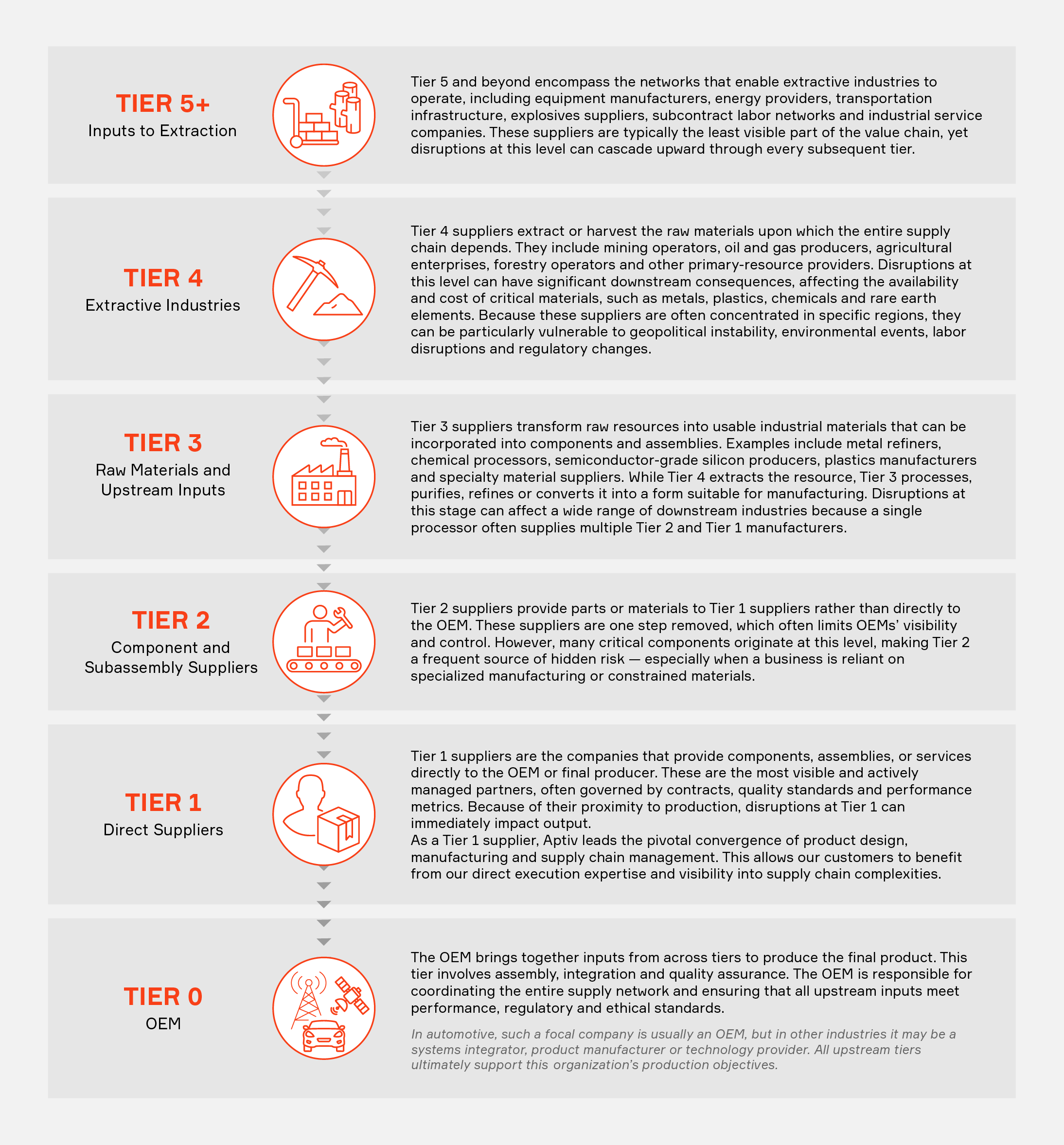
Supply chains are structured in tiers (for details, see “Visibility From the Periodic Table Up”), creating a hierarchy that describes how far a manufacturer is removed from its suppliers and end customers. Notably, this can depend on a company’s perspective. For example, a Tier 1 supplier for one company may be a direct customer for another. This is why a company that does not have visibility into its entire supply chain may miss the interlocking web of dependencies. As many companies have unfortunately learned, disruptions can originate far upstream in basic materials that were once viewed as commodities rather than strategic resources.
To avoid such crises, a company needs visibility into its supply chain network — at all tiers, not just Tier 1. That means collecting significant amounts of data about every supplier and then feeding that data into a modeling tool — a digital twin of that supply chain.
From Visibility to Action
A digital twin can transform supply chain management from reactive problem-solving into proactive risk management. Digital twins provide the visibility needed to uncover hidden risks and avoid a false sense of security. Without a comprehensive view of supplier relationships, companies can mistakenly assume that they have diversified sourcing when, in reality, multiple suppliers depend on the same underlying source.
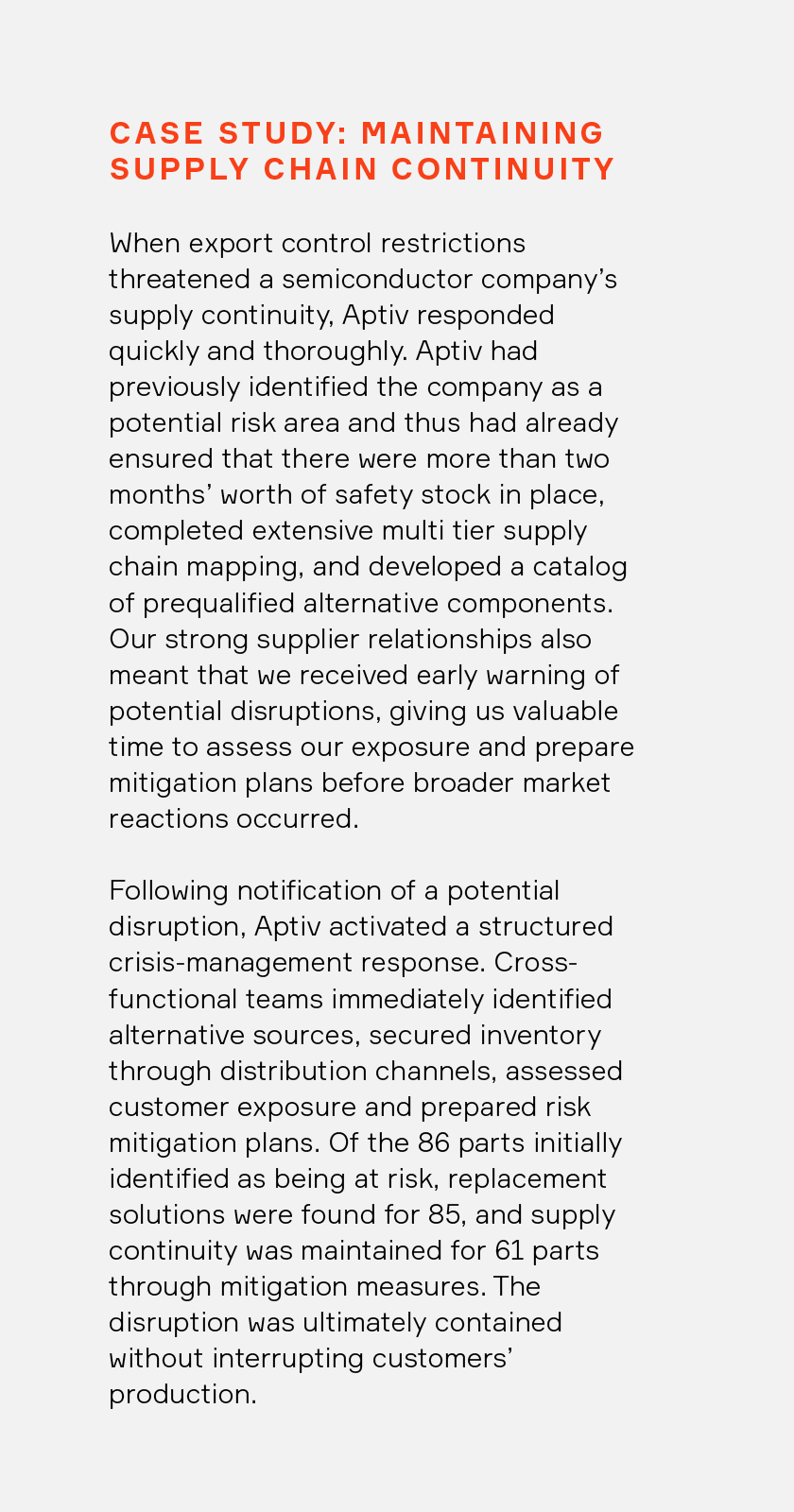
By mapping these dependencies and making them visible, digital twins help organizations identify concentrated risks, evaluate potential disruptions and take proactive measures, such as qualifying secondary sources or increasing inventory buffers to improve resilience.
Aptiv’s own digital twin contains more than 8 million supply chain relationships spanning approximately 1.5 million supply chain nodes. More than 25,000 materials and components are mapped across multiple supply tiers, enabling us to identify dependencies far beyond its immediate supplier base. Today, approximately 95 percent of our semiconductor supply is mapped from wafer fabrication through customer production facilities, while 96 percent of printed circuit boards are mapped from their copper clad laminate origin through customer plants.
The objective is not to build a better map of the supply chain — it is to make better decisions.
BOM Health and AI-driven Insights
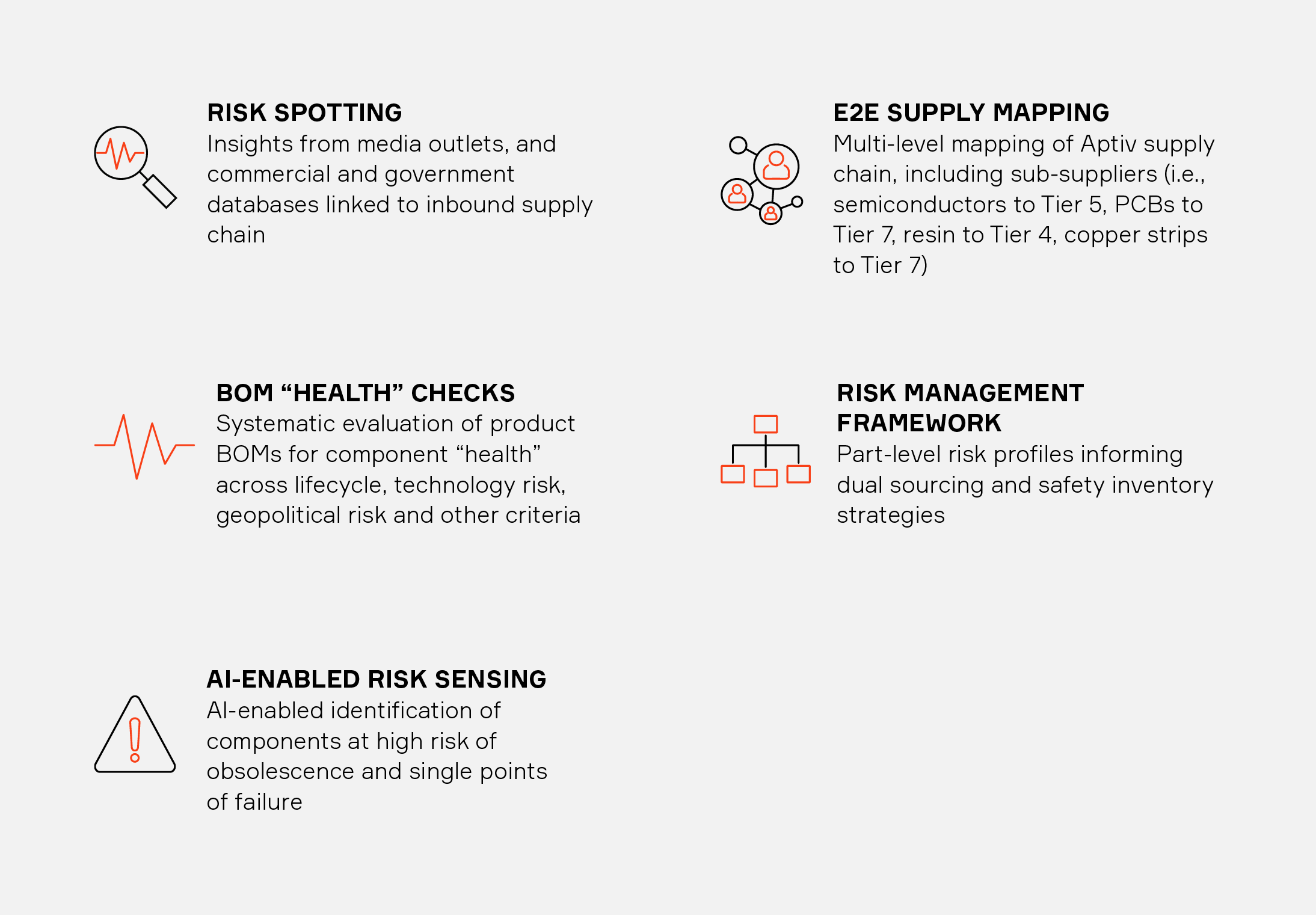
A resilient supply chain also requires more than visibility into individual parts: It requires a systematic evaluation of overall bill of materials (BOM) health. What may appear to be a healthy BOM can hide vulnerabilities, such as multiple suppliers relying on the same raw material processor. Components should be assessed for lifecycle risk, technology risk, sourcing concentration, geopolitical exposure and supplier dependency. This analysis helps identify vulnerabilities before the production process begins.
Likewise, components that are approaching end of life, dependent on aging technologies, concentrated in high-risk geographies or sourced from limited manufacturers can be flagged for mitigation through dual sourcing, alternative technologies, strategic inventory placement or the qualification of replacement parts.
AI-enabled risk sensing extends these capabilities further. Once multi tier supply chain visibility is connected to other business data — including engineering, production control, inventory and supplier performance — it evolves from static risk mapping into actionable intelligence. AI can identify patterns that human analysts might miss, such as common dependencies across suppliers, technology nodes, geographies or manufacturing processes. For example, an AI system can be used to analyze historical supplier decommits, identify concentrations of risk within specific value-chain nodes and predict which components may face future shortages. Rather than simply identifying potential disruptions, AI can help teams understand how to respond before those disruptions affect production.
It’s All About Data
At Aptiv, we often say that we want to map our supply chain down to the elements of the periodic table. It sounds like a joke, but it is not. True resilience requires understanding not only who supplies a component but also where the underlying materials originate and what dependencies exist across every level of the value chain.
A digital twin is only as good as the data that supports it. Building comprehensive supply chain visibility requires collecting and continuously maintaining supply chain dependency data across multiple tiers. That information may be obtained from a variety of sources and should be validated over time to improve accuracy and coverage. As the digital representation becomes more complete, organizations can better identify hidden dependencies, concentrations of risk and potential points of failure throughout the supply chain.
It requires surveying every company in the supply chain and going back to them on a regular basis to make sure the data is current and reliable. Such interrogations can be extended to incorporate multiple inputs, including thirdparty intelligence, automated discovery, supplier disclosures and other independent sources. It is important to insist that responding to the survey is not optional. As any business headline can confirm, seemingly complete pictures are only snapshots in time and must be continuously updated.
MANUFACTURING EXCELLENCE
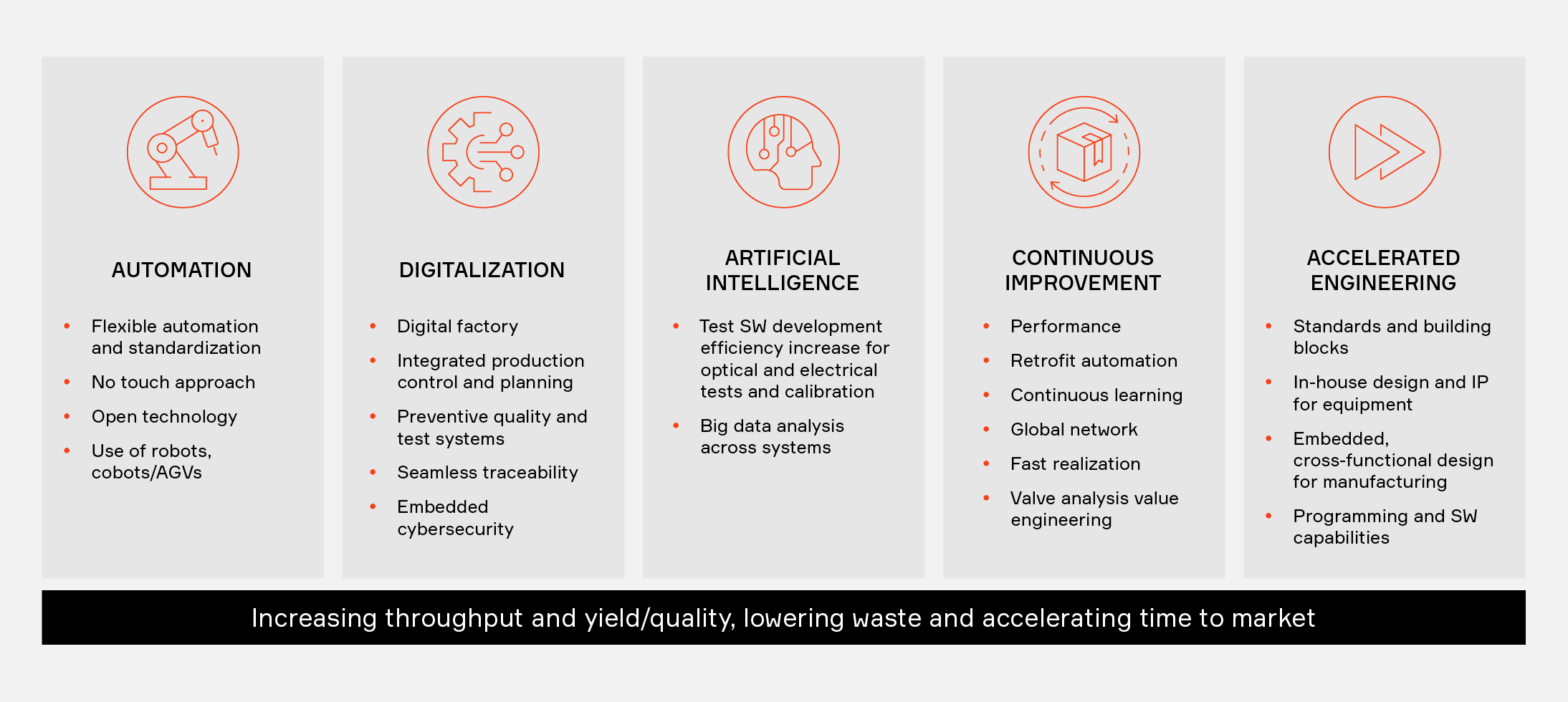
Manufacturing excellence depends not only on resilient supply chains but also on the ability to solve problems systematically, apply new technologies effectively and share knowledge across a global network. Five key enablers drive manufacturing performance: automation, digitalization, artificial intelligence, continuous improvement and accelerated engineering.
Together, those capabilities enable organizations to identify problems earlier, improve quality, respond more effectively to disruption, accelerate product launches and scale complex technologies with greater confidence. In addition to top-level enablers, foundational methods — ranging from localization to rethinking business processes — must be implemented to ensure success.
In-Region, For-Region
Globalization has delivered significant efficiency gains, but it has also increased companies’ exposure to disruptions, geopolitical tensions, tariffs and extended logistics networks. As a result, many organizations are adopting an inregion, for-region approach that aligns sourcing, manufacturing and distribution more closely with the markets they serve. By shortening supply lines and reducing reliance on distant production hubs, companies can improve their responsiveness and recover more quickly when disruptions occur. Regionalized supply chains also make it easier to adapt to local regulations, customer requirements and market conditions while both supporting sustainability and reducing costs by streamlining transportation.
Localizing does not mean abandoning global scale; rather, it balances global capabilities with regional resilience. For mission-critical industries, it lessens exposure to geopolitical uncertainty, trade restrictions and supply interruptions while helping to ensure consistent product availability. When combined with globally standardized quality systems and manufacturing processes, localization allows companies to achieve the agility of a regional operator without sacrificing the consistency and efficiency of a global enterprise.
Global Standards, Local Empowerment
Aptiv combines global supply chain management governance with local accountability to ensure consistent performance quality across all manufacturing locations. A standardized execution model enables disciplined deployment of best practices, while a robust read-across process quickly transfers lessons learned across plants, strengthening prevention, reducing risk and accelerating operational excellence worldwide. This benefits customers as they grow because they gain access to a scalable global manufacturing footprint capable of delivering the same quality, reliability and execution excellence across every region.
Lean 2.0 and Quality
Problems inevitably arise in manufacturing. High-performing organizations use structured methodologies such as Six Sigma and the Shainin System to identify root causes quickly, resolve issues effectively and prevent their recurrence.
Modern manufacturing also requires approaches such as Lean 2.0, which extends traditional lean manufacturing beyond efficiency and waste reduction to emphasize resilience, flexibility and digital intelligence. By identifying problems earlier and addressing them before they spread, Lean 2.0 helps organizations improve quality, strengthen operational performance and reduce risk across the value chain.
Aptiv reinforces those principles through our Lean 2.0 OPEX Tournament, which engages thousands of employees worldwide in continuousimprovement initiatives spanning manufacturing, logistics, quality and supply chain operations. Recent tournament-winning teams from Poland and Morocco were recognized for delivering measurable productivity and quality improvements that will drive stronger end-to-end performance.
Rapid Part Qualification and Replacement
When critical components become unavailable, the speed with which alternatives can be identified and approved often determines whether production continues uninterrupted. Effective organizations maintain qualified secondary suppliers, standardized specifications and digital validation tools that allow replacement parts to be assessed quickly without compromising quality or compliance. This capability transforms potential production stoppages into manageable operational adjustments.
Traceability and Assembly
Traceability ensures manufacturing accuracy, increases accountability and helps prevent counterfeit components from entering the supply chain, thus reducing both legal exposure and the safety risks posed by inferior substitutes. For manufacturers of mission-critical products, the ability to trace a component back to its source can mean the difference between quickly containing a problem and facing a costly disruption or recall.
Digital manufacturing provides the foundation through manufacturing execution systems, which create a digital record of the materials, Test and Automate One key aspect of manufacturing at scale is using custom assembly and test equipment to reduce lead times and accelerate time to market. The right equipment can enable companies to achieve continuous improvement and design for manufacturing. equipment, workstations and operators involved in producing each component. Every connector and wire can be assigned a unique identifier and tracked throughout assembly, creating a complete digital thread from raw materials to finished product. If a quality issue emerges, manufacturers can quickly trace it to its source and identify the root cause.
Modern systems extend this capability through cameras, cloud storage and AI-assisted inspection. Critical assembly steps can be permanently documented and automatically verified, creating auditable records that strengthen quality control and accelerate rootcause analysis.
Testing and Validation
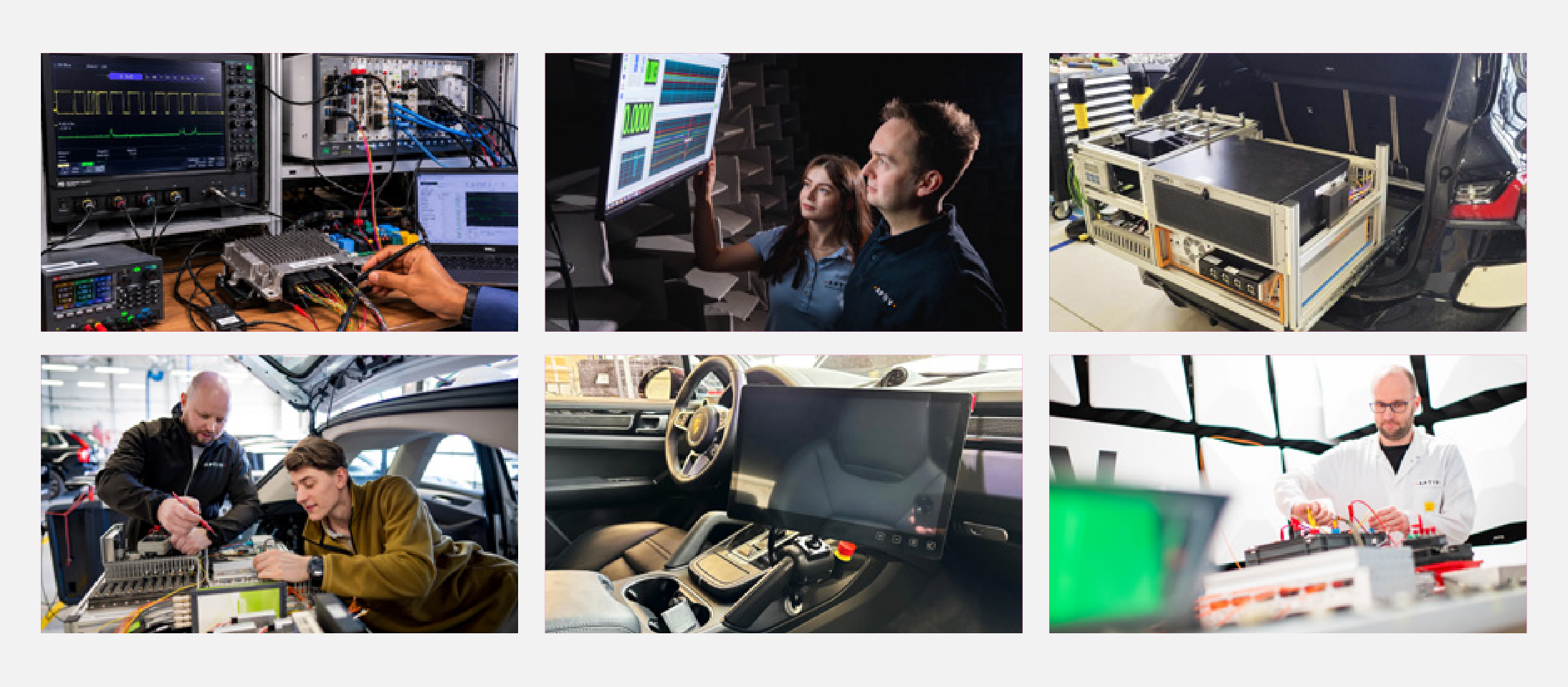
Testing and validation ensure that products meet performance, safety and quality requirements before they reach customers, helping to prevent defects, recalls and production disruptions. In complex manufacturing environments — particularly those involving electronics and safety-critical systems — validation also confirms compliance with regulatory and industry standards while supporting traceability across the supply chain.
Effective testing goes beyond quality assurance. It provides insights that improve designs, uncover process inefficiencies and drive continuous improvement. The most advanced programs combine simulation, physical testing and failure analysis in state-of-the-art laboratories, including electromagnetic compatibility, environmental, vibroacoustic and reliability testing. By identifying issues early and verifying performance under real-world conditions, testing and validation help ensure that products are ready to scale successfully in the marketplace.
Test and Automate
One key aspect of manufacturing at scale is using custom assembly and test equipment to reduce lead times and accelerate time to market. The right equipment can enable companies to achieve continuous improvement and design for manufacturing.
5 Key Enablers for Manufacturing Engineering
Excelling across these five areas will increase throughput, yield and quality,
while reducing waste and accelerating time to market.
BEYOND EFFICIENCY
For regulatory reasons — as well as for ethical business practices — supply chains and manufacturing facilities must be structured for more than just operational efficiency. Many government regulators now require companies to take active responsibility for conducting due diligence across their supply chains, not just in their own operations, including ensuring fair labor practices and the responsible sourcing of raw materials. Laws in multiple countries and jurisdictions require companies to identify, mitigate and report on human rights and environmental risks. Therefore, companies must maintain deep supply-chain visibility to help ensure compliance with increasingly strict U.S. and EU sourcing and reporting requirements.
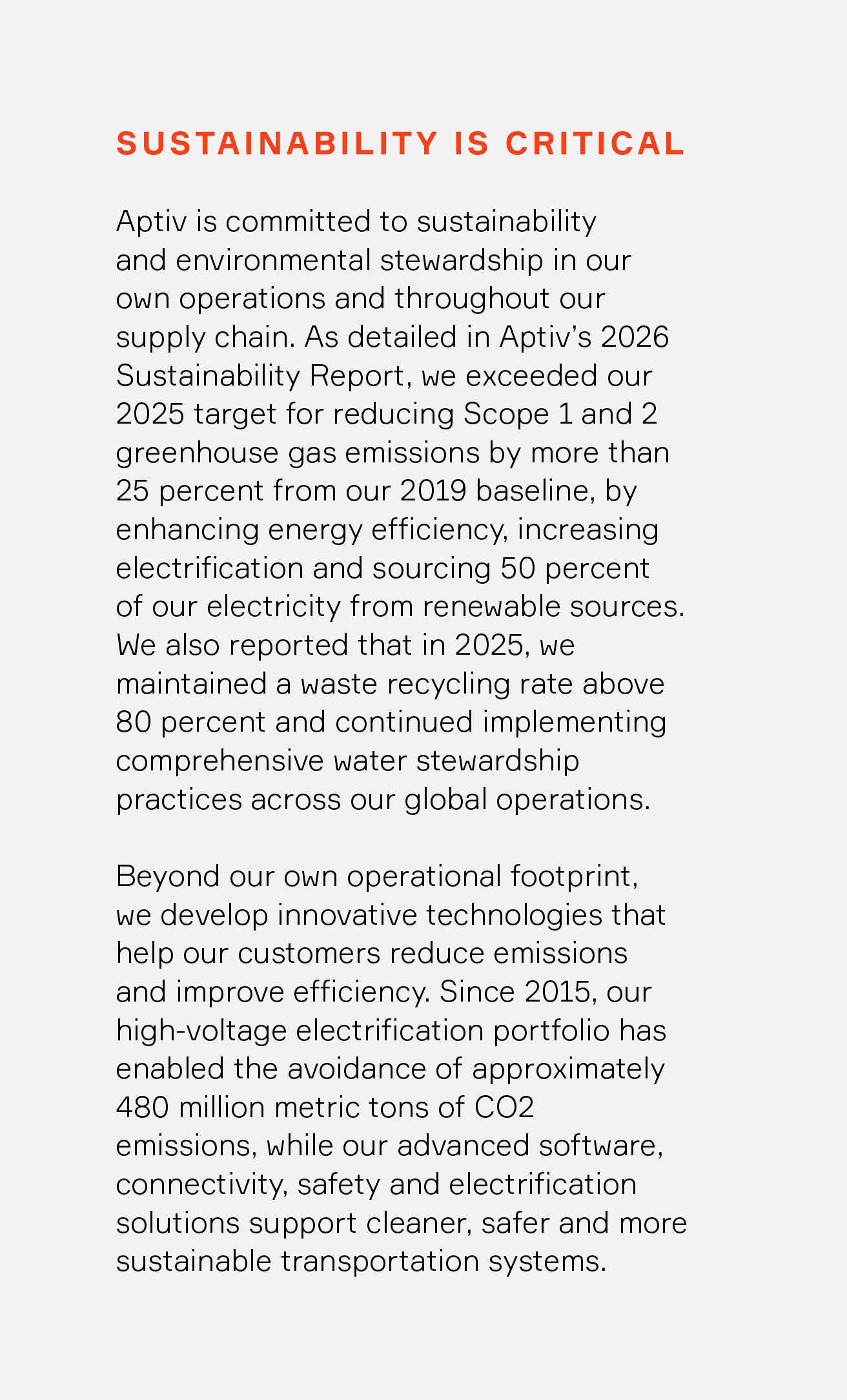
Sustainability must also be taken into account for regulatory compliance, brand reputation and human good. (For details, see “Sustainability Is Critical.”) Environmental risk reduction is enabled by assessing carbon footprints, sourcing responsibly and ensuring that supply chains can withstand climate-related events.
In addition to regulators, investors also are increasingly evaluating companies using environmental, social and governance criteria. Meanwhile, consumers and enterprise customers alike are demanding fair wages, transparency around sourcing, safe working conditions and the ethical treatment of workers, including completely banning child labor. All of this means that an entire product launch could be undone by the discovery of a labor violation in a remote supplier.
Companies, especially growing ones, need a supply chain partner with regulatory expertise, real-world experience and thorough knowledge of every supplier at every step in the supply chain, to mitigate risk and ensure accurate and timely compliance.
SUPPLY CHAIN RISK MANAGEMENT CAPABILITIES
These are some of the elements that set Aptiv’s approach apart:
MASTERING THE BUTTERFLY EFFECT
Technology companies often talk about “eating your own dog food” — the idea that the best way to validate a solution is to use it yourself. Aptiv puts that principle into practice every day by relying on our own digital supply chain tools, in-house testing and validation capabilities, and decades of manufacturing expertise to manage one of the world’s most complex production networks.
We help emerging technologies scale by combining systems integration, validation, global manufacturing and deep supply chain visibility into a single execution model. Rather than relying solely on procurement leverage to reduce costs, Aptiv redesigns systems to eliminate unnecessary complexity, consolidate components, optimize architectures and improve manufacturability.
The butterfly effect teaches that small events can produce outsize consequences. There are few places where that is more evident than in modern supply chains, where a disruption at any tier can ripple across the globe. Aptiv helps customers anticipate and adapt to those disruptions through deep visibility, resilient manufacturing and decades of execution experience. The future belongs to innovators. Leave the butterflies to Aptiv.
VISIBILITY FROM THE PERIODIC TABLE UP
In complex industries — such as semiconductors, automotive, aerospace and electronics — supply chains can involve dozens of upstream layers spread across multiple countries and regulatory environments.